Field guide
Inside an environmental lab: why water test results can be trusted
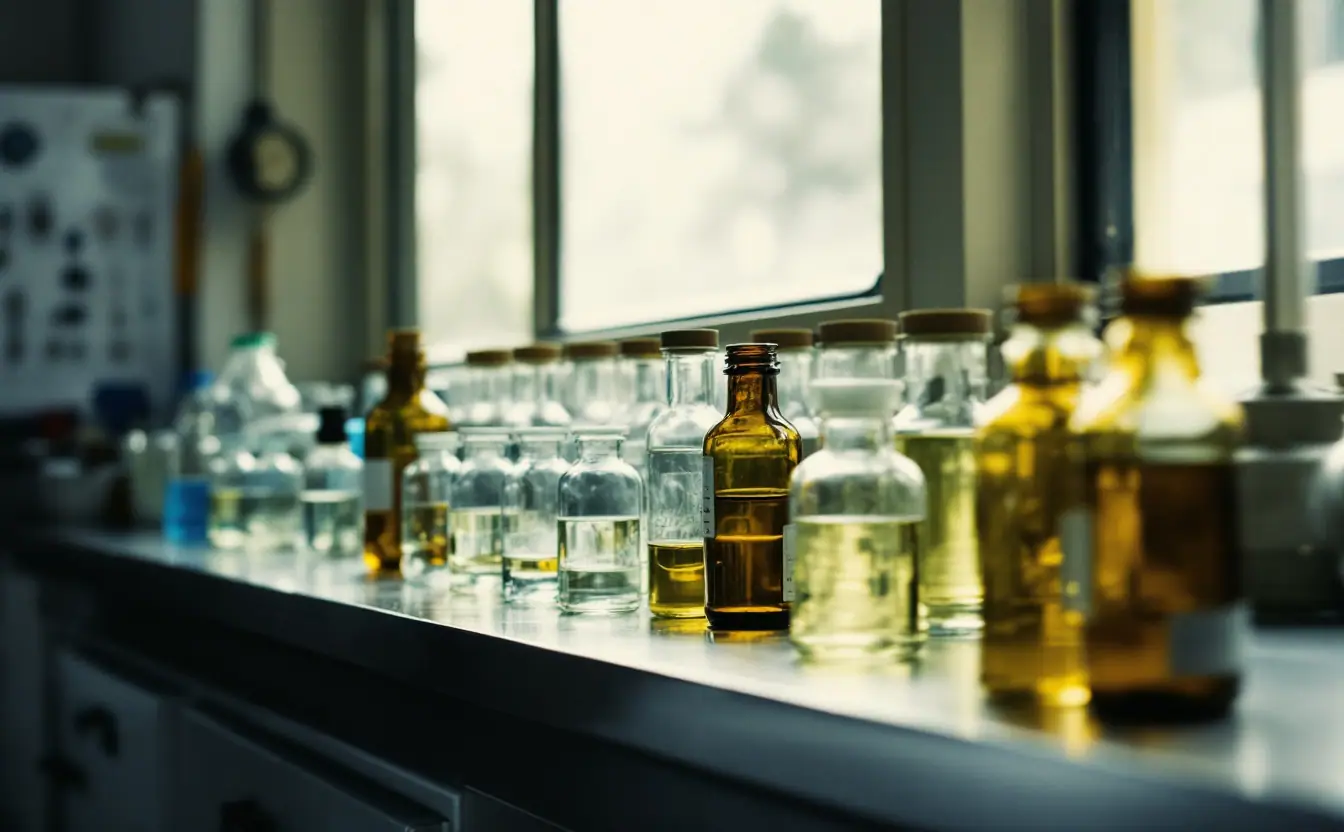
The bottle leaves in a cooler, a few days pass, and a report comes back: a column of numbers, a few less-than signs, a word like "absent" beside the bacteria line. Most people find the number they care about, compare it with the limit printed beside it, and move on. Fair enough. But that number rests on a surprising amount of checking, and knowing how it was made helps you judge when to trust it.
Environmental labs work at absurdly small scales. Many metals are reported in micrograms per liter, roughly parts per billion, which is on the order of a drop of ink in a backyard swimming pool. At that scale contamination is everywhere: on fingers, inside bottle caps, in the lab air, in the preserving acid. Quality control is how a lab shows its result reflects the water, not everything the water touched.
QA and QC, the short version
Labs talk about two related ideas. Quality assurance is the whole system: written procedures for every method, trained analysts, maintained instruments, and records that let anyone reconstruct months later how a result was produced. Quality control is the set of specific checks run alongside real samples, batch after batch, to show the system worked on that particular day.
Put another way, QA is the recipe and the kitchen rules. QC is tasting the soup before it leaves the kitchen.
Before the sample reaches the bench
A good share of bad results start before the lab ever sees the bottle.
The right container and preservative. Labs supply bottles matched to each test. Bottles for metals usually hold a little nitric acid to keep metals dissolved. Bacteria bottles are sterile and often contain a chemical that neutralizes chlorine. A clean jar from the kitchen, or a preserved bottle you rinsed out first, can spoil the test.
Cold and quick. Most samples travel on ice. Every test has a holding time, the longest a sample can wait between collection and analysis before the result is considered unreliable. Bacteria samples have some of the shortest, counted in hours, which is why labs set drop-off windows and may refuse a bacteria sample that shows up too late. Some nutrient tests allow a couple of days. Metals preserved with acid can usually wait for months.
Chain of custody. This form travels with the sample and records who collected it, when and where, and everyone who handled it afterward, with signatures and times. For a routine test it is mostly bookkeeping. For a baseline test before nearby construction or drilling, or any result that might matter in a dispute, an unbroken chain of custody is what makes the number defensible. Our guide to shale gas and water explains why baseline tests deserve that care.
The checks that run alongside your sample
Your bottle is rarely analyzed alone. It joins a batch, and the batch carries its own controls.
Blanks are samples that should contain nothing. A method blank is clean laboratory water carried through every step of the analysis; if it shows the target substance, something in the lab is contaminated. A field blank is clean water poured into a bottle at the sampling site, which catches contamination from handling and transport. For volatile chemicals such as fuel compounds, a sealed trip blank rides along in the cooler to show whether vapors crept in during the trip.
Duplicates are two measurements of the same water. A field duplicate is a second bottle filled at the same place and time; a lab duplicate splits one bottle in two. If the pair disagrees by more than the method allows, often expressed as a relative percent difference, the lab investigates.
Spikes test whether the lab can find what is really there. An analyst adds a known amount of the target substance to a portion of a real sample and measures how much comes back. Something in the water itself, which chemists call the matrix, can mask or inflate a result; very hard well water or salty brine can do it. A low recovery warns that results for that sample may read low.
Laboratory control samples are clean water spiked with a known amount, proving the method works when the matrix is not a factor. Calibration checks confirm the instrument still reads standards correctly through the whole run, not just first thing in the morning. For some organic chemicals, labs add surrogates, look-alike compounds, to every sample to track recovery bottle by bottle.
Detection limits and the less-than sign
Every method has a floor. The method detection limit is the lowest concentration a lab can distinguish from zero with high statistical confidence. A step above it sits the reporting limit, sometimes called the limit of quantitation, the lowest level the lab will state as a firm number.
That splits a report into three zones. Below the detection limit, a result shows as "ND" (not detected) or as a less-than sign followed by the limit. Between the detection limit and the reporting limit, many labs give an estimated value with a flag, often the letter J. Above the reporting limit, you get a plain number. A less-than sign never means zero. It means "not found at or above this level," and the level matters: if the detection limit sits above the health benchmark you care about, the result tells you very little.
Qualifier letters get a fuller treatment in our piece on how to read a stream water quality report, and the same logic applies to well water.
A cheat sheet of QC terms
| Term | What it is | What it tells you |
|---|---|---|
| Method blank | Clean lab water run through the whole analysis | Whether the lab added contamination |
| Field blank | Clean water bottled at the sampling site | Whether handling or transport did |
| Trip blank | Sealed clean water traveling with volatile samples | Whether vapors leaked in on the way |
| Duplicate | A second measurement of the same water | How repeatable the result is |
| Matrix spike | A real sample with a known amount added | Whether something in your water skews the result |
| Lab control sample | Clean water with a known amount added | Whether the method itself is working |
| Detection limit | Lowest level distinguishable from zero | How faint a trace the test can see |
| Reporting limit | Lowest level stated as a firm number | Where estimates end and firm results begin |
| Holding time | Longest allowed wait from collection to analysis | Whether the sample was still fresh |
| Qualifier (flag) | A letter beside a result | That the result needs a footnote |
What certification and accreditation mean
In the United States, labs that analyze drinking water samples for public water systems must be certified for that work. The U.S. EPA sets the framework under the Safe Drinking Water Act, and certification is usually carried out through state programs, so your state environmental or health agency can point you to certified labs nearby. Separately, many labs hold accreditation under national or international standards, such as the program run by The NELAC Institute or the ISO/IEC 17025 standard for testing laboratories.
Both rest on written methods, documented QC, periodic audits and proficiency testing, in which a lab analyzes samples of unknown concentration from an outside provider and has to get the right answer. Certification is usually granted for specific tests and methods rather than a lab as a whole, so a lab certified for bacteria may not be certified for arsenic. When you pick a lab for a private well, ask whether it is certified for the exact tests you are ordering. State environmental or health agencies typically publish lists.
Reading a well-water report at the kitchen table
Private wells are not covered by the federal Safe Drinking Water Act, so the homeowner decides what to test and what to make of it. Federal drinking water standards still make useful benchmarks. The EPA's maximum contaminant level for nitrate is 10 mg/L measured as nitrogen, for example, and for arsenic it is 10 µg/L. Standards get revised, so check current figures with the EPA or your state. In granite country, radon can also turn up in well water and needs its own test; our radon guide covers the basics.
Run through this list with any report:
- Sample ID, location and date match what you collected
- Collection and analysis dates fall within the holding time
- Units are clear; mg/L and µg/L differ by a factor of a thousand
- Every ND or less-than result has a detection limit below the benchmark you care about
- Qualifier letters are explained in the footnotes
- Results are compared with a current, named benchmark
- The lab noted that the sample arrived cold and intact
- A QC summary is available if you ask for one
If something looks off, contact the lab. They field these questions constantly. Retesting makes sense after a positive bacteria result, when a value lands close to a benchmark, or when a number surprises you, because a single sample is one moment in the life of a well.
FAQ
Do I need a certified lab for a private well test? Federal law does not require one for a private well, but a certified lab has shown it can run that specific test reliably. For any result you may rely on later, such as a baseline before nearby drilling or a home sale, certification and chain of custody are worth having.
Why did two tests from the same well disagree? Wells change with season, rainfall and pumping, so some variation is normal. Large differences can point to sampling technique, a missed holding time or a real change; retest.
What does a J flag mean? Usually that the substance was detected below the level the lab can quantify firmly, so the number is an estimate. Check the footnotes, since flag letters vary between labs.
Can a home test kit replace a lab? Strips and kits are handy for screening and for tracking things like hardness or pH between lab tests. They lack the blanks, spikes and calibration checks described here, so confirm any worrying result with a certified lab.