What the Air Quality Index actually means on a smoky day
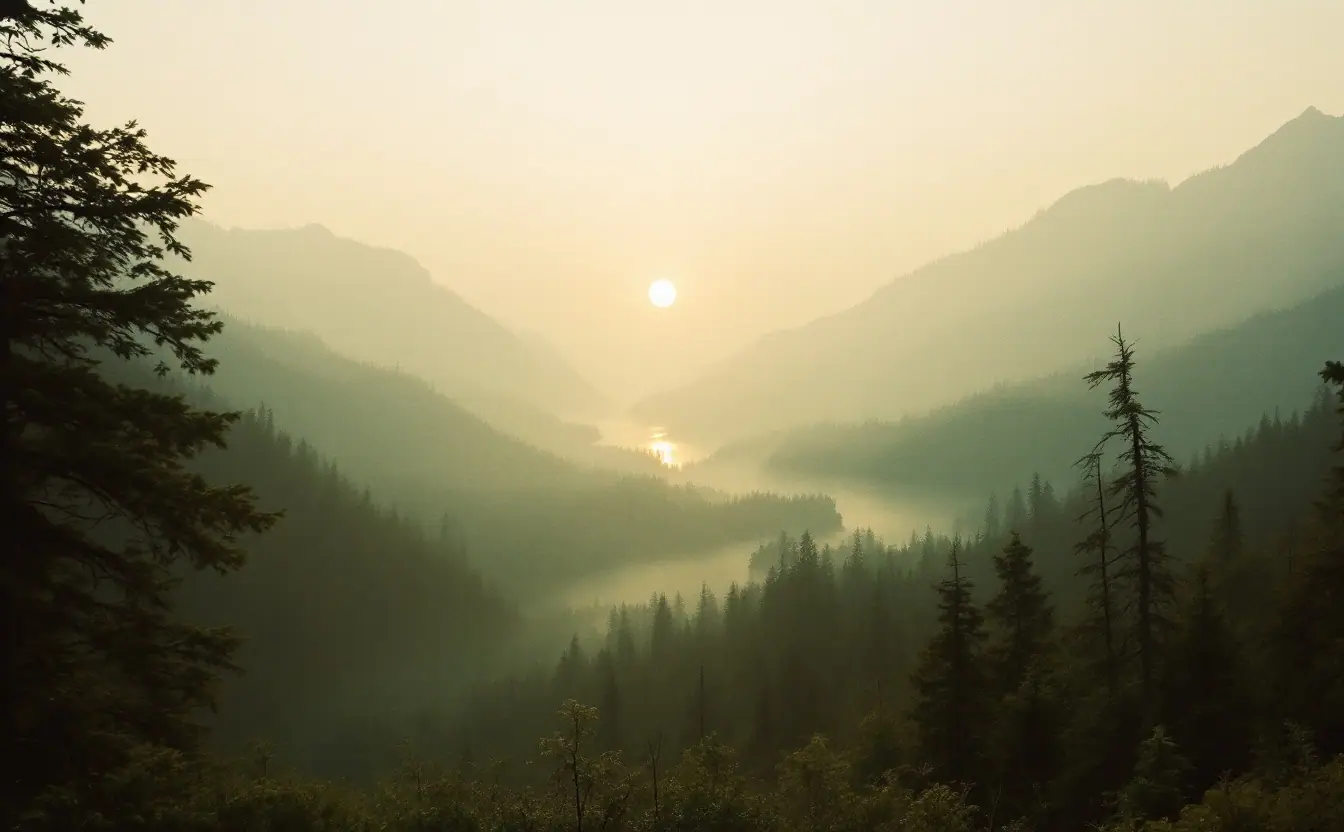
The sky gives the first warning. On a smoky morning the sun comes up the color of a traffic cone, the far ridge goes missing, and the light in the kitchen turns a flat, strange amber. Then the phone chimes and a number appears in a colored box: 162, red, Unhealthy. Most people glance at it the way they glance at the pollen count, wince, and carry on.
For several years I ran air-sampling instruments for a university atmospheric-chemistry group, which mostly meant babysitting pumps, filters and blinking boxes on rooftops. I came away with a soft spot for the Air Quality Index. It's a translation, and a pretty good one, of messy concentration data into something a person can act on before finishing their coffee. It helps to know how the translation works, especially on the days the whole town smells like a campfire.
The number is a translation
The AQI runs from 0 to 500. Behind it sit measurements of five common pollutants: ground-level ozone, particle pollution, carbon monoxide, sulfur dioxide and nitrogen dioxide. Each pollutant gets its own AQI value, calculated from its concentration, and the index you see is the highest of them. On a smoky day, that's almost always fine particles.
The scale is anchored at 100. Roughly speaking, an AQI of 100 corresponds to the national short-term health standard for that pollutant. Below 100 the air meets it, above 100 it doesn't, and the further above, the more people are likely to feel it.
There is one more piece of fine print. In February 2024 the U.S. EPA lowered its annual standard for fine particles and, in the same decision, revised the particle AQI so that the green band ends at a lower concentration than before. If a hazy morning reads a shade more yellow than you'd have guessed from past summers, that's part of the reason.
Six colors, read band by band
The categories come with official names that sound like they were written by a committee, because they were. Here's what each one means in practice.
Green, 0 to 50: Good
Air quality is satisfactory and poses little or no risk. Go outside and open the windows. This is the band we'd all like to live in.
Yellow, 51 to 100: Moderate
Acceptable for most people. A small number of people who are unusually sensitive to a pollutant may notice it, and they might consider shortening long or heavy exertion outdoors. For everyone else, it's a day to keep half an eye on the trend.
Orange, 101 to 150: Unhealthy for Sensitive Groups
This is the band where the name does the work. Sensitive groups include people with asthma or other lung disease, people with heart disease, older adults, children and teenagers, and pregnant people. On smoky days, add anyone working or exercising hard outside for hours. If that's you, cut back on strenuous activity outdoors and keep inhalers or medication close. Most healthy adults won't notice much, but kids at soccer practice breathe a lot harder than the parents watching them.
Red, 151 to 200: Unhealthy
Now anyone may begin to feel effects, and sensitive groups may feel them more seriously. This is when I move runs indoors, keep children's outdoor time short and easy, and switch on the air cleaner.
Purple, 201 to 300: Very Unhealthy
This is a health alert: the risk is increased for everyone. Sensitive groups should avoid outdoor exertion entirely, and everyone else should keep it brief.
Maroon, 301 and up: Hazardous
Emergency conditions. Stay indoors with filtered air if you can. Smoke has pushed American cities into this band more than once. In September 2020, during the Labor Day fires, readings in parts of Oregon ran past the top of the scale, and in June 2023 smoke from wildfires in Quebec drove readings in parts of the Northeast into the maroon.
Why smoke is mostly a particle story
Wildfire smoke is a stew of gases and particles, but the part that dominates the AQI, and does the most harm to people, is PM2.5: particles 2.5 micrometers across or smaller. A human hair is roughly 20 to 30 times wider. Particles that small slip past the nose and throat and reach deep into the lungs, and the finest can pass into the bloodstream.
Smoke also travels absurdly well. A fire in British Columbia or northern California can put haze over the Great Lakes, and Western smoke has dimmed sunsets as far east as the Atlantic coast. Sometimes it rides high, giving you a red sun while the air at ground level stays fairly clean. Other times it sinks into valleys overnight and sits there until the afternoon sun stirs the air enough to lift it. Mountain basins and river valleys, from Montana's Bitterroot to the hollows of the Appalachians, are notorious for holding smoke on calm nights.
Why your phone and your neighbor's disagree
Smoky days produce a lot of arguments about whose number is right. A few reasons they differ:
- NowCast versus daily average. Forecasts and daily summaries for particles use a 24-hour average, but the real-time readings on AirNow use a method called the NowCast that leans heavily on the latest few hours. When smoke rolls in fast, the hourly number climbs before the daily one catches up.
- Monitors versus sensors. Regulatory monitors are expensive, carefully maintained instruments, and there aren't many of them. Low-cost sensors are everywhere and react faster, but they need correction to match the reference instruments, especially in smoke. AirNow's Fire and Smoke Map shows both, with the sensor data corrected.
- Distance. The nearest official monitor might be twenty miles and one ridge away. In hilly country, that can be a different airshed. Our guide to public maps and data tools explains how to find the monitors closest to you.
- Different pollutants. One app may be showing ozone while another shows particles.
My rule is simple. If you can see the smoke and smell it, don't wait for the number to agree with you.
Ozone, the other summer number
Not every orange day is a smoky one. Ground-level ozone forms when sunlight cooks nitrogen oxides and volatile organic compounds from tailpipes, power plants, industry and even vegetation. It builds on hot, sunny, stagnant afternoons, peaks in the late afternoon, and fades after dark. Smoke, by contrast, can be at its worst at dawn, when it has settled into low ground overnight.
That difference in timing is useful. On an ozone day, a morning run is usually the better choice. On a smoke day, check the hourly readings before assuming mornings are cleaner. Fires also release the ingredients that make ozone, so the two can pile up together downwind of a big blaze.
Clean air indoors
Most of us spend most of our time inside, and indoor air is the part you can actually control. With a few habits, a house or apartment can become a refuge on the worst days.
Close windows and doors when smoke is heavy. If you have central air, run the fan and use the best filter your system can handle; MERV 13 is the common recommendation for smoke. A portable air cleaner with a true HEPA filter, sized for the room, makes a real difference in a bedroom. A box fan with a MERV 13 furnace filter strapped to the intake side is a well-tested budget option, as long as you use a newer fan and don't leave it running unattended.
Don't add to the problem. Skip candles, incense, frying and the wood stove on smoky days, and vacuum only with a HEPA vacuum. Avoid "air purifiers" that work by generating ozone, which is a lung irritant in its own right. In the car, set the ventilation to recirculate.
For necessary time outdoors, a well-fitting N95 respirator filters fine particles. Cloth masks and loose surgical masks do little against smoke. And once the smoke clears, remember that some indoor air problems never leave; radon is the classic one, and it has its own testing guide.
A smoky-day checklist
Keep this on the fridge from late spring through fall:
- Check the current AQI and the hourly trend, not just the daily forecast.
- Note which pollutant is driving the number.
- Close windows and doors, and set the car to recirculate.
- Run a HEPA air cleaner in the room where you sleep.
- Swap in a MERV 13 filter if your system can take it.
- Move hard workouts indoors at orange if you're in a sensitive group, and at red for everyone.
- Keep inhalers and medications within reach.
- Check on neighbors who are older, have heart or lung conditions, or live alone.
- Have N95s ready for errands and chores you can't skip.
- Leave the candles, the frying pan and the fireplace for another day.
The haze usually breaks the way it arrived, with a shift in the wind. One afternoon the far ridge reappears, then the one behind it, and the kitchen light goes from amber back to plain daylight. That's the moment to open every window in the house.
Hollow & Headwater is an independent publication. Nothing here is official guidance – for permits, rules or emergencies, go to the relevant public authority.