Sustainable Living · Air & Climate
Heat pumps in cold mountain valleys: what works and what to watch
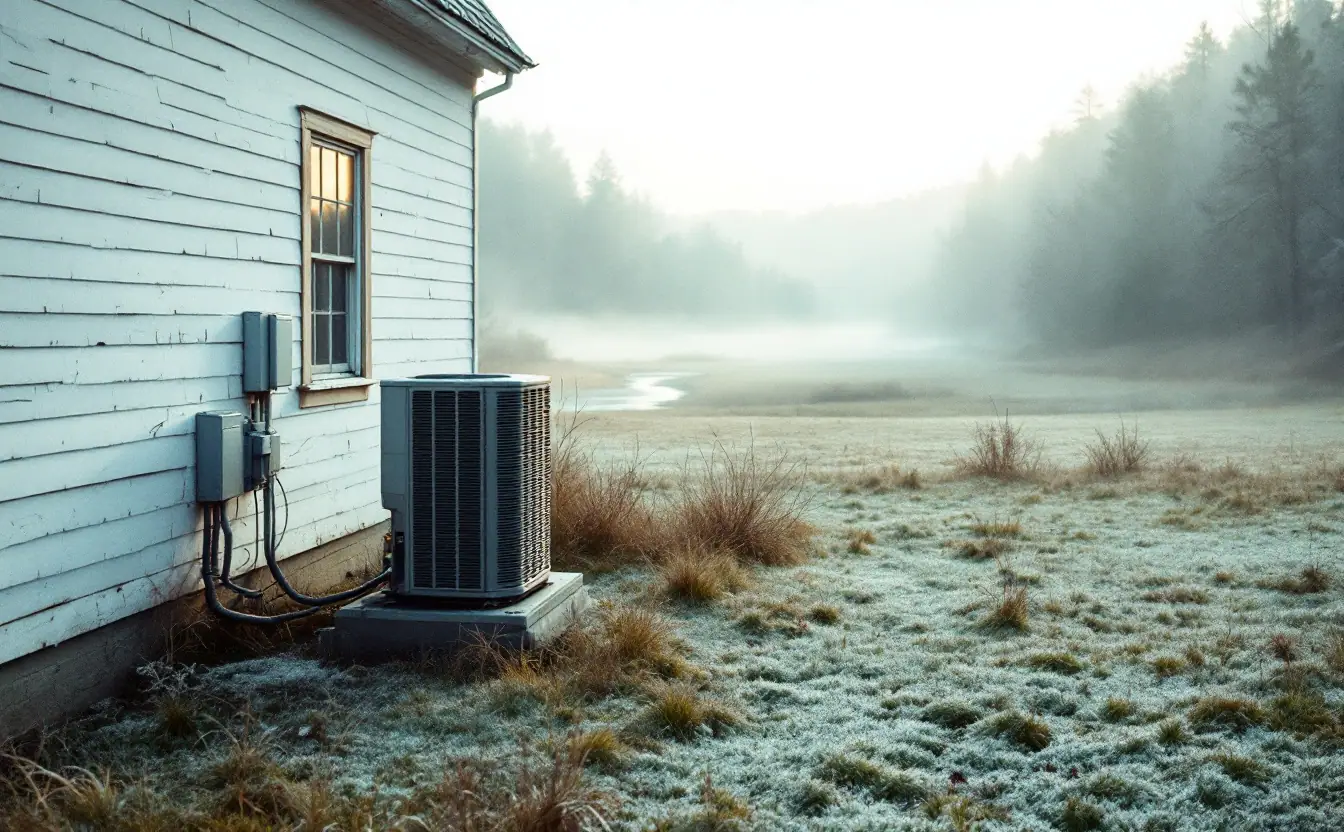
Our farmhouse sits on the floor of a narrow valley, and on clear winter nights the cold slides off the ridges and settles around the house like water filling a tub. By dawn the thermometer on the porch often reads well below the forecast for town, ten minutes up the road and a few hundred feet higher. Fog sits in the bottom until mid-morning. When we started thinking about replacing a tired oil furnace, the folk wisdom I had soaked up said a heat pump would never keep up down here.
That wisdom is out of date, but it isn't entirely wrong. Modern cold-climate heat pumps can carry a house through a mountain winter, and plenty of households in far colder places rely on them. Valleys do add wrinkles of their own, from frost pockets to defrost ice to the plain fact that rural power lines come down in ice storms. These are the questions I had to answer for myself, roughly in the order they came up.
How a heat pump works, in one paragraph
A heat pump doesn't burn anything. It moves heat that already exists from one place to another, the same way your refrigerator moves heat out of the food and into your kitchen. Outdoors, cold refrigerant evaporates inside a coil and absorbs heat from the air, even freezing air, which still holds a surprising amount of heat energy. A compressor squeezes the refrigerant, raising its temperature, and indoors it condenses and gives that heat up to your rooms. In summer a valve reverses the flow, and the same machine becomes an air conditioner.
Why a valley is its own climate
On calm, clear nights the ground loses heat to the sky, the air touching it cools, and that cold, dense air drains downhill like a slow liquid. It pools on valley floors and in hollows, forming what orchard growers have long called frost pockets, while slopes a little higher stay milder. Meteorologists call this an inversion, because temperature rises with height instead of falling. The effect is strongest on the same still, starry nights that bring the coldest mornings.
That pooled air is often damp as well. Valley fog, heavy frost and long spells of hovering around freezing are ordinary in the bottoms. Those conditions matter to a heat pump in ways a single temperature reading doesn't capture, as you'll see below.
The questions, answered
Do heat pumps really work below freezing?
Yes. Older heat pumps earned their poor reputation in cold country honestly: many lost so much output in deep cold that backup electric heat ended up doing most of the work. Current cold-climate models use variable-speed compressors and other refinements that let them keep producing useful heat well below 0°F. Their output still falls as the temperature drops, which is awkward, because that's exactly when your house needs the most heat.
So the job is choosing a unit with enough capacity at your valley's cold extremes, not just on an average winter day. Ask to see a model's rated heating capacity at low outdoor temperatures, not only at the standard rating point. Some regional efficiency organizations publish lists of cold-climate models with performance data at several outdoor temperatures, which makes comparison much easier.
What is COP, and why does everyone keep mentioning it?
COP stands for coefficient of performance. It's the heat a system delivers divided by the energy it consumes, both measured in the same units. Electric baseboard heat has a COP of 1: one unit of electricity in, one unit of heat out, every time. A heat pump can beat that because most of the heat it delivers isn't made from electricity at all; it's gathered outdoors and carried inside. A COP of 3, for instance, would mean three units of heat for every unit of electricity.
COP isn't fixed: it drops as the gap between outdoor and indoor temperature widens, because the machine has to work harder to lift heat across a bigger difference. A heat pump is at its most efficient on a mild day and less so on a bitter morning in the frost pocket. For whole-season comparisons, U.S. equipment carries an HSPF2 rating, the current version of the heating-season efficiency score. Higher is better, and it's most useful for comparing models side by side.
What is a balance point?
Picture two lines on a graph against outdoor temperature. One is how much heat your house loses, which climbs as it gets colder. The other is how much heat your heat pump can produce, which falls as it gets colder. Where they cross is the balance point. Above it, the heat pump carries the whole load; below it, something else has to make up the difference, whether built-in electric resistance strips, an existing furnace or a wood stove.
A tighter house pushes the balance point lower, which is one of the best arguments for sealing and insulating before you buy. There's also an economic version of the idea. In a "dual-fuel" setup that keeps a furnace for backup, the controls can switch over below the temperature at which burning fuel becomes cheaper than running the heat pump.
Why is my outdoor unit steaming?
On damp days near freezing, the outdoor coil runs colder than the surrounding air and collects frost. Every so often the unit runs a defrost cycle: it briefly reverses to warm the coil, the outdoor fan stops, and the frost melts off, sometimes in an impressive cloud of vapor. That's normal and over in minutes. The indoor air may feel a little cooler while it happens, or backup heat may switch on briefly.
In a foggy valley, expect more defrosting than a dry, breezy ridge would see. The heaviest frosting tends to come in raw, wet weather close to freezing rather than on the coldest, driest nights. All that meltwater has to go somewhere, which brings us to placement.
Where should the outdoor unit go?
This is where valley living matters most, and where a good installer earns their fee. Snow, ice and meltwater are the three things to plan around.
- Up off the ground. A stand or wall bracket above your usual snow depth keeps drifts off the coil and lets meltwater drain away.
- Out from under the eaves. Snow and ice sliding off a metal roof can crush a fan guard. A gable end, or a small protective roof over the unit, avoids that.
- Away from paths. Defrost water refreezes. Don't let it drain onto a walkway, the steps or the spot where you park.
- Clear on all sides. Follow the installation manual's clearances, keep leaves, brush and woodpiles back, and resist boxing the unit in to hide it.
- Mind the noise. Modern units are quiet, but a bedroom window or a neighbor's porch is still the wrong place for one.
Ducts, ductless or ground-source?
Houses with sound ductwork can use a ducted heat pump much like a central furnace, though ducts sized for a furnace sometimes need changes. Heat pumps deliver air that's warm rather than hot, which feels different at the register and makes duct sizing matter more. Old farmhouses like ours, heated for generations by stoves and radiators, are often better suited to ductless mini-splits: a compact indoor head on the wall of each main room, connected to an outdoor unit by a slim refrigerant line.
Ground-source, or geothermal, systems draw on the steady temperature underground instead of winter air, so the frost pocket barely touches them. They're very efficient, but installation costs much more, and in steep, rocky mountain ground, drilling wells or digging trenches can get expensive quickly. Get a site-specific quote before you fall for the idea.
How big a system do I need?
Not "one ton per so many square feet." Rules of thumb ignore insulation, windows, air leaks and climate, and they're especially unreliable in a valley that runs colder than the nearest weather station. Ask for a room-by-room heat-loss calculation; in the U.S. the standard method is called Manual J. An oversized unit short-cycles and wastes energy, while an undersized one leans on backup heat more than it should. If an installer won't do a load calculation, keep looking.
Can I still turn the thermostat way down at night?
You can, but deep setbacks often backfire with a heat pump. When the house has to climb back several degrees on a frigid morning, many systems call on their resistance strips to speed things up, and that's the most expensive heat you can buy. A steady setting, or only a modest setback, usually works better. Many installers will tell you the same.
What happens when the power goes out?
The heat pump stops. So do most modern furnaces, whose blowers and controls need electricity, but it's worth planning for in places where ice storms bring lines down along the ridges. We kept our wood stove, and I'm glad every time the lights flicker. If you plan to rely on a generator, have an electrician confirm it can actually run the system. Older houses sometimes need an electrical service upgrade before a heat pump goes in at all, so ask about that early.
Should I insulate first?
Almost always. Air sealing and insulation shrink the heat load, which can mean a smaller, cheaper system and less dependence on backup heat. Our green tips page lists some of the cheap sealing jobs worth doing first. A tighter house also traps more of whatever is in its air, so it's a good moment to think about ventilation and to test for radon if you haven't. Our guide to radon testing and fixes covers how.
Will it cost less to run than what I have?
That depends on your electric rate and what you're replacing. To compare honestly, look at the cost of delivered heat: what each fuel costs per unit of energy, divided by how efficiently the equipment turns it into warmth inside your house. Replacing electric baseboard is usually a clear win, since the heat pump does the same job with less electricity. Against propane or oil the math often favors the heat pump, though not always, and against inexpensive natural gas it's closer and varies more from place to place.
Rebates and tax credits come and go, so check what's current before you sign anything. The ENERGY STAR site is a reasonable starting point for finding certified equipment, and more of our home-energy writing lives under sustainable living.
One thing to do before you call anyone
Put an inexpensive min-max thermometer on a post in the back yard, out of direct sun, and read it every morning for a few weeks of real winter. The gap between your yard and the official forecast is the number your installer actually needs. And on some still January dawn, with fog lying in the bottom and the ridgetops already gold, you'll see exactly where that number comes from.
Hollow & Headwater is an independent publication. Nothing here is official guidance – for permits, rules or emergencies, go to the relevant public authority.