Air & Climate · Science & Explainers
Best roof rake for snow: reach, blade type and sparing the shingles
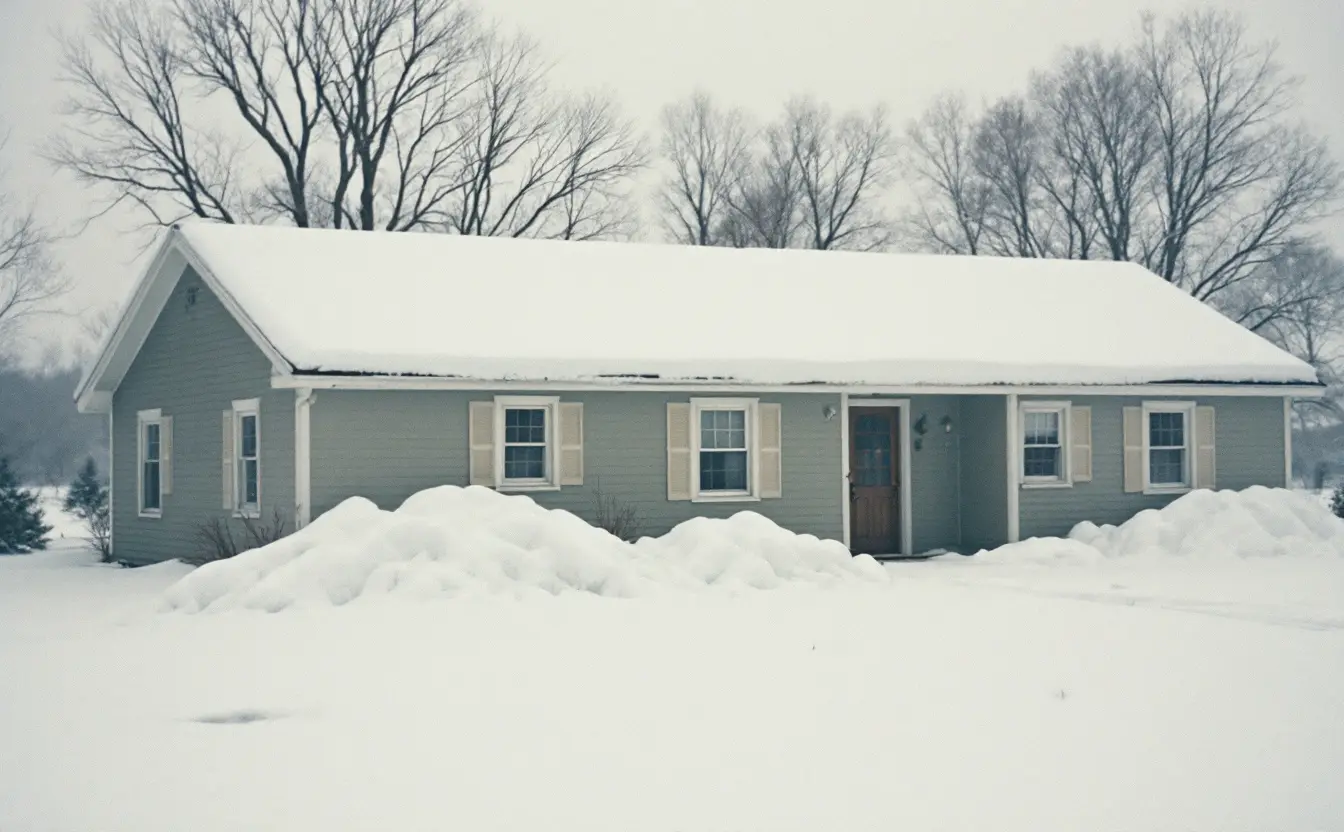
For most one-story houses, the best roof rake for snow is a telescoping blade rake with small rollers or bumpers that hold the blade just off the shingles. For a two-story house, or for deep snow you would rather not haul down by the armful, a long slide-sheet rake such as the SNOWPEELER, which reaches about 30 ft, cuts the snow loose and lets it ride off on a plastic sheet. Either kind is used from the ground, kept well clear of every overhead wire, and stopped an inch or two short of the roof itself.
Years of keeping air-sampling instruments alive for a university lab left me with one dull habit that carries over to snow: measure first, then act. A roof rake solves a narrow problem, usually the lower few feet of the roof, and the right one depends on how high your eaves sit and where the wires run.
When does raking the roof make sense?
Most roofs are built for the snow their region normally gets, so a rake is not for every flurry. It earns its place when ice dams are forming at the eaves, when the load is climbing toward what the roof was designed for, when rain is forecast onto deep snow (check weather.gov before deciding a big load can wait), or when a porch roof, carport or shed is carrying more than you trust.
Depth alone is a poor guide to weight. Our roof snow load calculator does the conversion: with its default inputs, 12 inches of settled snow at 25% water on a 1,200 square foot roof, it shows 3 inches of water, 15.6 lb per square foot, and about 18,720 lb on the roof as a whole. That is several cars' worth of weight, spread thin and parked on your shingles. Whether it matters depends on your roof's design load, which our piece on how much snow a roof can hold explains how to find.
Hire an insured roof snow removal contractor instead when you cannot reach the lower few feet of roof from a spot well back from the wall, when the roof is flat, steep or large, when any wire runs near the part you need to clear, or when meltwater is already coming inside. If you see sagging, new cracks or doors that suddenly stick, the job is getting people out of that part of the building, not raking.
About these links: some go to partner shops and may earn us a commission.
Blade rake or slide-sheet rake?
Roof rakes come in two basic designs, and they move snow in opposite directions.
A blade rake is a wide, shallow blade on a telescoping pole. You set it into the snow a few feet above the eave and pull it down toward you in strips. Good ones ride on small wheels or bumpers so the edge never touches the shingles. It works on most kinds of snow, including the shallow or crusted leftovers that give a slide-sheet design trouble. The cost is labor: every load comes down by your arms, and wet snow pulls back.
A slide-sheet rake has a frame at the top of the pole with a long plastic sheet trailing behind it. You push the frame up the roof from the eave; it cuts under the snow, and the snow slides down the sheet and off the roof in a long ribbon. Gravity does the hauling, which makes it the easier tool in deep snow. It needs a fair depth of snow to bite into, it can be awkward in wind, and the snow piles up wherever the sheet ends.
| Blade rake | Slide-sheet rake | |
|---|---|---|
| How it moves snow | You pull it down in strips | You push the frame up; snow slides down the sheet |
| Snow it suits | Most kinds, including shallow or crusted | Deeper snow that can be cut loose |
| Who does the hauling | Your arms and back | Mostly gravity |
| Shingle protection | Rollers, bumpers or a deliberate gap | Frame rides in the snow, sheet lies on top |
| Where it struggles | Heavy wet snow, long sessions | Thin snow, wind, tight corners |
- Telescoping roof rakeA long-reach rake for pulling snow off the lower edge of a roof from the ground.
- SNOWPEELER 30 ft roof rakeA long-reach rake that slides snow off on a plastic sheet instead of scraping it down.
Both are here on the strength of reading rather than raking. I went through what each maker publishes about pole length, the locks between sections and the blade or sheet, read the assembly and use instructions, then sorted owner reviews for whatever complaint came up again and again. Neither has been on a roof here, so treat the pair as a starting point, not a verdict. The telescoping blade rake suits most one-story houses; the SNOWPEELER, at about 30 ft by its own name, is the one for taller walls or a deep, wide roof.
How much reach do you need?
The length printed on a roof rake is the length of the pole, not how far up the roof it gets you. You cannot stand against the wall, because that is where the snow lands, and once you stand back the pole spends a good part of its length just getting to the gutter.
Some triangle arithmetic, with made-up but plausible inputs. Say the gutter on a one-story house is 6 ft above your hands and you stand 8 ft out from the wall: the pole needs 10 ft just to reach the gutter (the old 6, 8, 10 triangle from school). On a two-story house, say the gutter is 15 ft above your hands and you stand the same 8 ft out: now 17 ft of pole is gone before the blade touches snow. Whatever is left is your working reach, and it is less than it looks, because the pole climbs over the roof rather than lying along it.
So on a one-story house, a standard telescoping blade rake is usually enough to clear the lower few feet, which is the band that matters most. On a two-story house, only the longest rakes get usefully past the gutter; a rake like the SNOWPEELER is built for that job, and even then, plan on clearing the lower band and leaving the rest. On a raised ranch or a sloping lot, measure from where you will actually stand, not from the front walk.
Longer poles are heavier and bend more at full extension, so your shoulders will file a complaint by the fourth strip. They also sweep a lot more sky, which brings us to the wires.
Where are the power lines?
If you remember one section of this guide, make it this one. Roof rake poles are usually aluminum, which conducts electricity, and a pole that is wet or iced can carry current even where the maker has fitted a fiberglass section. The wire people forget is the service drop: the line from the utility pole to the house, which often attaches near the very eave you want to clear.
- Before you extend the pole, walk around the house and look up. Note every wire, including the service drop.
- Keep the pole, and the snow sliding off it, well clear of all of them. If the strip you need sits under or beside a wire, it belongs to a contractor.
- Extend and collapse the pole while it points away from wires, never straight up overhead.
- Never knock snow or ice off a wire or try to lift a sagging one. Treat any low or downed line as live, stay away, and call the utility.
How do you protect the shingles?
Asphalt shingles carry a coat of mineral granules that shields the asphalt from sunlight, and a blade scraped down to the surface knocks those granules loose. Frozen shingles are also brittle, so a blade dragged hard across them can crack tabs.
Rollers, bumpers or a deliberate gap keep the edge off the roof, and the habit that matters most is leaving an inch or two of snow behind. That last layer is not what loads the roof, and it will go on its own. Pull straight down the slope rather than sideways across the shingles, and work up from the eave a few feet at a time so you never bring down a huge slab at once. Leave ice alone: chipping at an ice dam with the blade, a hammer or an axe damages a roof faster than the ice does.
Snow on a metal roof often slides off by itself, in slabs and without warning, and a blade can scratch the coating. Check the roofing maker's guidance first, and stay out from under that eave.
Clearing a band along the eaves
Ice dams start upstairs. Heat leaking into the attic warms the upper roof, snow melts there, and the water runs down and refreezes over the cold overhang, backing up under the shingles. Raking a band several feet wide along the eaves after a heavy snowfall takes away the snow that would melt and refreeze at the edge. It is a stopgap. The lasting fix is air sealing and insulation in the attic, the dull, effective sort of job our green tips page is fond of.
Where will the snow land?
Every pound you pull off the roof lands right beside the wall, which is where a house keeps its more delicate parts. Before you start, look at what sits below the strip:
- Walkways and steps, where a pile becomes the icy lump everyone trips on until March.
- Furnace, water heater and dryer vents on the side wall. A buried exhaust vent can push fumes back indoors, so dig them out by hand when you finish.
- The gas meter and regulator, or a propane regulator, which need to stay clear.
- A heat pump's outdoor unit, which needs open air around it all winter.
- Window wells and basement windows.
What about the ground you stand on?
Raking puts you at the drip line of the roof, where meltwater freezes every night, on snow packed hard by your own boots, eyes fixed upward. That is how people end up on their backs with a pole coming down after them. Slip-on ice cleats over your boots give grip on that glazed band.
- Yaktrax Walk traction cleatsCoil cleats that stretch over shoes for icy driveways, paths and frozen trails.
These coil cleats were picked from the maker's sizing chart and fitting instructions and from the long trail of owner reviews describing how they wear through a season on driveways and paths; no traction measurements of mine went into it. Take them off before you come indoors, because on a smooth floor they skate. Our guide to ice cleats for walking compares coils with spikes and chains.
The same wet, heavy snow that loads a roof also bends limbs onto lines, and a long raking day sometimes ends by flashlight. A fuel generator belongs outdoors, well away from doors and windows, never in a garage. BLUETTI's battery power stations make no exhaust and can keep lights, phones and a fridge going indoors.
Common roof rake mistakes
- Buying by the length on the box. Do the triangle first.
- Standing under the eave while snow and icicles come down.
- Raking from a ladder, or climbing onto the roof. Stay on the ground.
- Scraping down to bare shingles.
- Forgetting the service drop.
- Clearing one side of a heavily loaded outbuilding completely while the other stays full. Take snow off both sides in turns so the load stays even.
Questions
How long should a roof rake be for a two-story house?
Longer than the box suggests, since much of the pole goes into reaching the gutter. Only the longest rakes, such as the SNOWPEELER at about 30 ft, get usefully onto a two-story roof. If you still cannot reach the lower few feet from a safe spot clear of wires, hire a contractor.
Will a roof rake damage my shingles?
It can if the blade scrapes. Use rollers or bumpers, leave an inch or two of snow, pull down the slope rather than across it, and never chip at ice. Shingles are brittle in hard cold, so go gently.
Do roof rakes prevent ice dams?
They help by clearing the snow along the eaves that would otherwise melt and refreeze there. They do nothing about the cause, which is heat escaping into the attic. Raking buys time; air sealing and insulation fix it.
Is a slide-sheet rake better than a blade rake?
For deep snow on a tall or wide roof, a slide-sheet rake usually means less hauling. For shallow or crusted snow and tight corners, a blade rake is easier to control. Where both kinds of snow turn up every winter, owning one of each is less silly than it sounds.