Air & Climate · Sustainable Living
Wood stove carbon monoxide: causes, warning signs and alarm placement
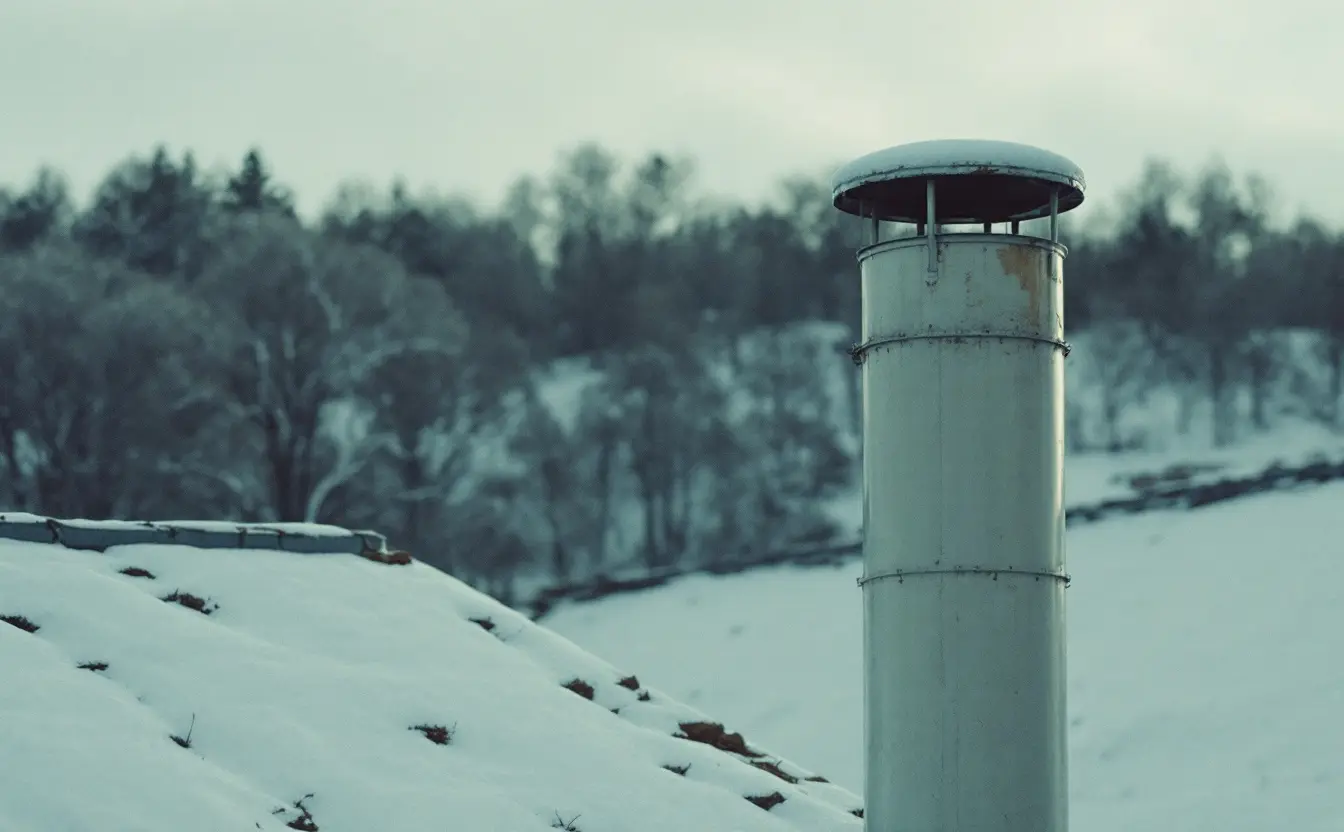
Every wood fire makes some carbon monoxide. It forms whenever wood burns without enough air or heat, and a smoldering fire makes the most. A sound stove on a working chimney carries it outside; the trouble starts when the flue is blocked or cold, the draft fails, door gaskets leak, or exhaust fans pull air down the chimney and push the gas into the room. CO alarms on every level and outside each sleeping area, a yearly chimney inspection and a handful of habits keep it out of the house.
This piece is about the gas you can't see or smell. My colleague Calvin has already written about wood smoke and indoor air, the particles and the habits that make a stove burn cleaner, so I'll stay on the CO side of the stove and leave the smoke to him.
Why does a wood stove make carbon monoxide?
Burning is carbon meeting oxygen. With plenty of air and heat, the carbon in wood leaves as carbon dioxide. When the fire runs short of air or too cool, some of it stops halfway as carbon monoxide, a gas that binds to the hemoglobin in your blood far more readily than oxygen does and crowds the oxygen out.
The fires that make the most CO are the ones many of us were taught to build: a big load turned way down for the night, wet wood that keeps the firebox cool, and the last hour of a fire when the coals glow and the air control is shut. Modern stoves burn off much of that gas inside the firebox with secondary air or a catalytic combustor, but only while they're running hot enough. A stove-top thermometer tells you whether yours is.
About these links: some go to partner shops and may earn us a commission.
How does CO get from the stove into the room?
A chimney is an engine that runs on heat. Hot flue gas is lighter than the cold air outside, so it rises and pulls fresh air into the stove behind it. That pull, the draft, is what keeps smoke and CO moving one way, up and out. Anything that weakens it lets gas spill.
- A cold flue. At startup, or when a fire has burned down to coals, the chimney may barely draw. A cold chimney on an outside wall can even run backward.
- A blocked flue. Creosote, a bird's nest, leaves or a collapsed liner narrow the passage. A spark screen clogged with soot on the cap does the same.
- Wind and terrain. A house tucked under a ridge or tall trees can catch downdrafts when the wind comes from the wrong side, and a chimney that ends below a nearby roofline struggles too. Our hollow taught me that one.
- Leaky seals. Flattened door gaskets, loose glass gaskets and gaps at pipe joints let gas seep out even when the draft is fine.
- Shutting down too early. Closing a pipe damper or the air control fully while coals still glow traps gas in the stove, and it finds the leaks.
What is backpuffing, and what does poor draft look like?
Backpuffing, sometimes called puffback, is the stove exhaling: bursts of smoke and gas from around the door or air inlet, sometimes with a soft thump. It happens when a firebox full of hot, smoky gas is starved of air and pockets of that gas ignite all at once when they finally meet oxygen. The usual setup is a big fresh load on a bed of coals with the air turned down before the new wood has caught.
Other signs of weak draft: smoke rolls out when you open the door, the fire is slow and sullen to start, the glass blackens fast, and the room smells of smoke after every reload. Wherever smoke escapes, CO can follow.
Fixes, roughly from easiest to hardest:
- Give a new load full air until it's burning well, then turn it down in steps.
- Load smaller amounts more often instead of packing the firebox.
- Warm a cold flue before lighting: a twist of burning newspaper held up near the flue opening gets the draft going.
- Open the door slowly, a crack first, so the draft can catch up.
- Burn dry wood. Our guide to telling whether firewood is seasoned shows how to check it.
- Have a sweep look at the chimney's height, the cap and whether the liner suits the stove. A flue that's too big, too short or too cold is a construction problem, not a habit problem.
Why do exhaust fans cause trouble?
A house breathes. Every bit of air pushed out by a kitchen range hood, a bath fan or a clothes dryer has to be replaced from somewhere, and in a tight house the easiest way back in can be a chimney. When the stove is roaring, its draft usually wins. When it's just lit or burning down, a strong range hood can reverse the flow and pull smoke and CO back down the flue. This is negative pressure, and it gets more common after a renovation, because sealing drafts makes a house tighter.
We found that out the slow way after tightening up the farmhouse. The tighter house is warmer and cheaper to heat, and it argues harder with the chimney when the range hood runs. What helps:
- Don't run big exhaust fans while lighting the stove or while it burns low.
- Crack a window near the stove when you light it, so the house isn't starved for air.
- Ask whether your stove accepts an outside air kit, and whether local code allows one.
- A large range hood may need a make-up air supply; the installer can tell you.
- Remember that a furnace or water heater with its own flue competes for the same air.
Where should carbon monoxide alarms go?
Put an alarm on every level of the house, basement included, and one outside each sleeping area, close enough that sleepers will hear it. Many people add one in the room with the stove; check the maker's guidance on distance from fuel-burning appliances, since mounting one too close can cause nuisance alarms. Keep alarms out of dead corners and away from windows, vents and fans that dilute the air they sample. Interconnected alarms that all sound together are worth having in a house with bedrooms on another floor.
Test them monthly with the button. Replace the whole unit on the maker's schedule, often 7 to 10 years, because the sensor wears out; the date is printed on the alarm. Learn the difference between the alarm pattern and the low-battery or end-of-life chirp before you need to. The U.S. Consumer Product Safety Commission publishes more on CO alarms and home safety.
- Kidde battery carbon monoxide alarmA battery CO alarm for the room with the stove and near sleeping areas.
- X-Sense CO and smoke alarmsLinked smoke and carbon monoxide alarms.At X-Sense ›
How I narrowed these down: listing and sensor details from the makers, their placement instructions, and the patterns in years of owner feedback. None of it involved gas in a test chamber, so where your own alarm's manual disagrees with me, the manual wins.
What does carbon monoxide poisoning feel like?
The early symptoms are headache, dizziness, nausea, tiredness and confusion, which is why it's often described as flu without a fever. Clues that it's CO rather than a bug: several people in the house feel ill at once, pets seem dull too, and everyone perks up after a few hours away from home. Higher exposures bring vomiting, chest pain, weakness, fainting and unconsciousness, and a sleeping person can be overcome without waking. Infants, older adults, pregnant people and anyone with heart or lung disease are at higher risk.
What should you do when a CO alarm goes off?
- Get everyone out into fresh air, pets included. Don't stop to hunt for the source.
- Call emergency services from outside or from a neighbor's house.
- Get medical care for anyone with symptoms, and say that carbon monoxide is suspected.
- Stay out until responders say the air is safe. Opening the windows and going back in is not a fix.
- Leave the stove cold until the cause is found. Have the chimney and stove inspected and the problem repaired before the next fire.
- Treat it as real even if the alarm stops once you're outside and nobody feels ill. A draft problem that showed up once will show up again on the next calm, cold night.
Which maintenance heads off most CO trouble?
Here's the list I run every fall, before the first real fire:
- A yearly chimney and stove inspection, with sweeping as needed, by a certified sweep.
- The cap and spark screen checked for soot, leaves and nests.
- The door gasket checked by closing the door on a strip of paper at several points; if it slides out with no drag, the gasket needs replacing.
- Glass gaskets and pipe joints snug, every screw in place.
- Every alarm tested, with its replacement date checked.
- Wood under 20 percent moisture, and enough of it stacked for the season; our firewood cord calculator turns a stack's measurements into cords.
Questions
Can a new certified stove still make carbon monoxide?
Yes. Certified stoves burn more completely when they're running properly, but every wood fire makes some CO, and any stove can spill it when the draft fails. The alarms are still needed.
Will my smoke alarm warn me about CO?
Only if it's a combination unit listed for both. A plain smoke alarm doesn't detect carbon monoxide, and a CO-only alarm doesn't detect smoke.
Is it safe to keep the stove burning overnight?
With a sound stove, a clean chimney and working alarms, many households do. The risky version is the big load turned down to a smolder, which makes the most CO and creosote. Follow your stove manual's advice for overnight burns.
What about heat and power during an outage?
Keep the stove going if it's drawing well, but never run a fuel generator indoors or in a garage. Battery power stations make no exhaust and can run small loads inside; our wood stove accessories guide covers what they can and can't do. On a dark, iced-in night, a working alarm by the bedroom door is worth more than any of it.