How to tell if firewood is seasoned: signs, a meter and the wait
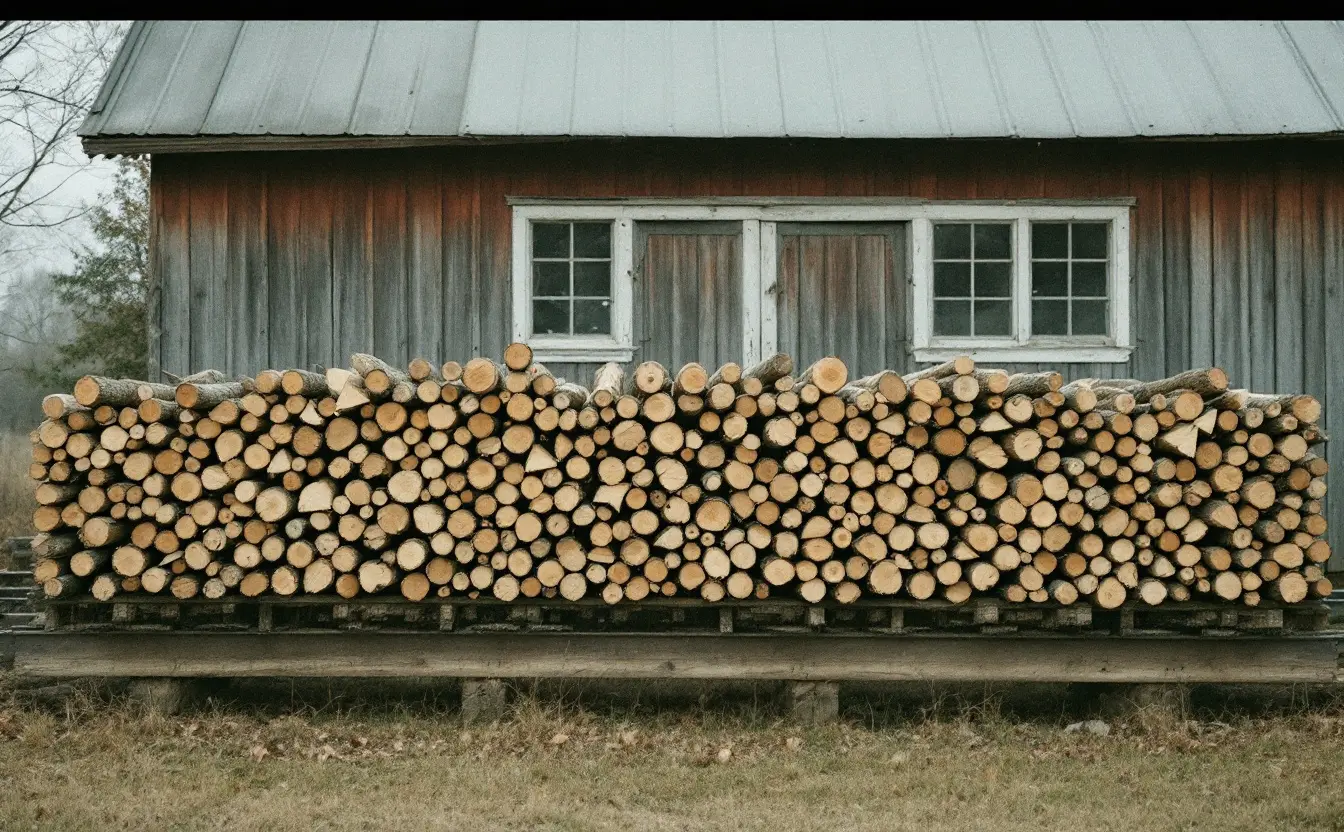
Seasoned firewood has dried to below about 20 percent moisture, and the surest way to know is to split a piece and push a pin moisture meter into the fresh face. Without a meter, look for cracks across the ends, grey weathered ends, bark that lets go easily, a split that feels lighter than it looks and a hollow knock when two pieces meet. Wood that hisses, steams or bubbles at the ends in the stove is not there yet.
That's the short answer. The longer one matters because "seasoned" may be the most stretched word in the whole firewood trade. Our first winter in the farmhouse, we bought two loads sold as seasoned that sizzled like bacon, blackened the stove glass by breakfast and left the kitchen colder than the fire looked. Here's what I've learned since about reading wood, measuring it, drying it and buying it.
What does "seasoned" actually mean?
It's about water, not age. A freshly cut tree is full of sap, and until most of that water leaves, the fire has to boil it off before the wood can burn properly. That steals heat, keeps the firebox cool and sends unburned gases up the flue, where they condense as creosote. It also makes more of the fine smoke particles that drive the readings in our explainer on what the Air Quality Index means on a smoky day.
The usual line is 20 percent moisture on a pin meter, and the U.S. EPA's Burn Wise program uses the same mark in its firewood advice. Wood cut two years ago can still be wet if it sat in a heap under a tarp, and wood split last spring can be ready by fall if it was stacked well in a windy spot. The calendar is a hint. The reading is the answer.
What are the signs of seasoned firewood?
You can get a fair verdict with your hands, eyes and ears. No single sign is proof, but when four or five line up, you're probably close.
- Checks on the ends. Cracks radiating from the center like wheel spokes open up as the wood shrinks while it dries. Deep, open checks are a good sign; a few hairline ones are not enough.
- Grey, faded ends. Fresh-cut ends look bright and often a little damp. Sun and weather turn them dull grey over the months.
- Loose bark. On many species the bark loosens and slips off seasoned splits. Bark that clings tight, with pale wet wood under it when you pry a corner up, usually means the piece is still green.
- Weight. A dry split feels oddly light for its size. Heft one from the stack and one you know is fresh, and the difference is obvious.
- Sound. Knock two splits together. Dry wood gives a sharp, hollow clack; wet wood gives a dull thud.
- Smell and feel. The fresh face of a wet split often feels cool and smells sappy or sour. Dry wood smells faint and dusty.
- Behavior in the stove. Hissing, bubbling at the ends, steam and a fire that sulks are the stove telling you what the stack didn't.
Each sign has its traps. Rain darkens and wets the outside of perfectly dry wood, and the outer row of a stack dries faster than the pieces buried in the middle. Some species, birch above all, keep their bark even when dry. That's why the meter earns its place.
How do you test firewood with a moisture meter?
A pin meter is a small handheld tool with two steel pins that measure how easily a tiny current passes through the wood; wetter wood conducts more. It's simple to use, but the way you take the reading decides whether the number means anything.
- Bring a few splits indoors and let them reach room temperature, a few hours or overnight. Cold wood reads low, which flatters a wet stack.
- Choose pieces from different parts of the pile: the top, the middle, the shady end, the side away from the wind.
- Split each piece with a hatchet or maul so you have a freshly exposed face. The outside and the ends dry first and will lie to you.
- Push the pins into the middle of that fresh face, lined up across the grain, as deep as the meter allows.
- Read two or three spots per piece and note the highest. If your meter has species settings, pick the closest one and follow the manual's notes on firewood.
- Judge the stack, not the best piece. If most readings sit under 20 percent, burn it. In the low twenties, give it more weeks. Well above that, it belongs in next year's pile.
About these links: some go to Amazon and partner shops and may earn us a commission. As an Amazon Associate I earn from qualifying purchases.
- General Tools MMD4E pin moisture meterA pin meter for split firewood: push the pins into a fresh split face for a reading in percent.Details at Amazon ›
- Magnetic stove-top thermometerA dial thermometer that sits on the stove top so you can keep the fire in its efficient range.Details at Amazon ›
These two earned their spot on paper and on other people's winters: the pin length, display and settings each maker lists, plus the gripes that surface most often in owner reviews. I haven't held either one up against a lab-grade instrument, so think of the list as a shortcut, not a verdict. The meter is the one to buy first. A stove-top thermometer comes second, because once the wood is dry it shows whether the fire is running in its efficient band or smoldering.
A meter's number is a reading, not a lab result. Inexpensive meters don't agree perfectly with one another, so treat a reading right on the line as "nearly there" rather than a pass.
How long does firewood take to season?
Most split hardwood needs about 6 to 12 months stacked off the ground, top covered and sides open, and oak often takes longer. Species, split size, climate and the spot you choose all move that window. The table gives the rough order I go by; read it as relative speed, not a schedule.
| Wood | How fast it dries | Notes |
|---|---|---|
| Ash, cherry, red and silver maple | Toward the quick end | Ash starts out drier than most when green |
| Pine, spruce, fir and other softwoods | Quick | Burns fast; good for fall and spring fires |
| Poplar and aspen | Quick once split | Light wood, less heat per armload |
| Birch | Quick only if split | Bark holds water; whole rounds can rot inside |
| Sugar maple, beech, hickory | Middle of the window | Dense and worth the wait |
| Red and white oak | Slow | Often needs a second summer |
Smaller splits dry faster because more surface meets the air. Climate matters as much as species: a split of oak on a breezy, sunny slope in the dry interior West will be ready long before the same split in a damp Southeastern hollow or under the drip of Pacific Northwest firs. When in doubt, the meter settles it.
How should you stack firewood so it dries?
Drying is mostly airflow and sun. A tidy stack in the wrong place can sit wet through two summers.
- Get it off the ground on pallets, old rails or a row of scrap lumber, so the bottom course doesn't wick up moisture.
- Stack in single rows with a hand's width between them, so wind can move through.
- Put the rows where sun and wind reach them, ideally with the long side facing the prevailing wind.
- Cover only the top: a sheet of roofing, a lean-to or a tarp held up off the wood. Leave the sides open. A tarp pulled to the ground traps damp air like a terrarium.
- Keep drying stacks away from the house walls; insects and moisture don't belong against the siding.
- Crisscross the ends of each row in a little tower to hold it upright.
How do you buy "seasoned" firewood without regrets?
The word on the ad isn't a standard. Some sellers mean wood split a year ago and stacked under cover. Others mean trees felled last winter and dumped in a heap. A few questions sort them out:
- When was it cut, and when was it split?
- How has it been stored: stacked under cover, or piled loose?
- What species is it? A load that's mostly oak needs more time than a load of ash.
- Can I check a few pieces with a meter before it's unloaded?
Then split a random piece from the middle of the load and read it. Kiln-dried bundles cost more but arrive ready. Green wood bought in spring, stacked well and left alone until fall, is usually the less expensive route and puts the drying in your hands. Buy close to home, too: moving firewood long distances spreads tree pests such as the emerald ash borer, and many states restrict bringing it in. Once it's stacked, run the length, height and depth through our firewood cord calculator to see how much you actually got.
Questions
Can firewood be too dry?
Not dangerously so, but very dry wood burns fast and hot. Kiln-dried splits can flare and push a stove's temperature up quickly, so load a little less and keep an eye on the stove thermometer. It's a far smaller problem than wet wood.
Does firewood keep drying over the winter?
Slowly at best. Cold, damp air carries little moisture away, so most real drying happens from spring through early fall. Wood stacked in November usually isn't ready until the following autumn.
Can I finish drying wood indoors?
Bringing in a day or two of splits and stacking them near the stove, but well outside its clearances, can drive off surface damp. Drying whole loads in a basement puts that water into your house air and invites insects and mold. Keep the real drying outside.
Does seasoned wood go bad?
It can. Wood left on the ground or wrapped tight in a tarp turns soft and punky as fungi move in, and punky wood burns poorly and reads wet. Well-stacked wood under a roof keeps for years.
Is burning wood actually green?
That depends on how honest you're being. Dry wood in a modern stove burns far cleaner than wet wood in an old one, and wood from down the road beats fuel trucked across the country. But the smoke is a real local air problem, and the carbon goes up now while regrowth takes decades to pull it back down, so I treat wood as a sensible heat source for our place rather than a virtuous one. We kept our stove as backup to the system described in heat pumps in cold mountain valleys, and a dry stack is what keeps that arrangement honest.