Air & Climate · Science & Explainers
How to measure snowfall: a snowboard, a ruler and the water inside
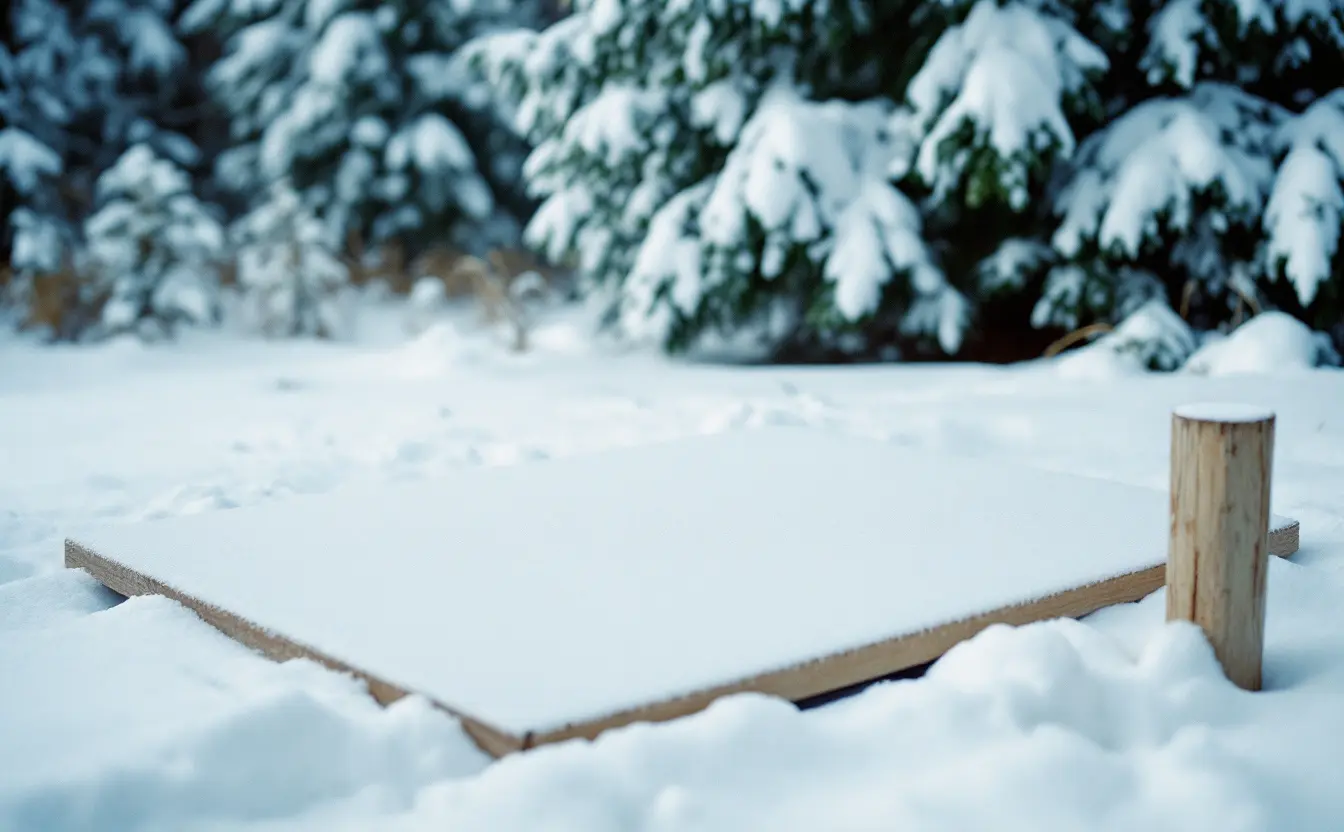
To measure snowfall, set a white board on the ground before the storm, push a ruler straight down through the new snow until it touches the board, and read it to the nearest tenth of an inch. Take several readings across the board and average them. Clear the board and measure again no more often than every six hours, then add the readings together for the day's total.
That gives you one of three numbers people mean when they talk about snow. Snow depth is everything on the ground, old and new, measured once a day. Snow water equivalent is the water you'd get if you melted it, and it's the number that tells you how heavy the snow on your roof really is. All three need a ruler, a board, a straight-sided gauge and a few minutes in cold socks.
The first snow I ever measured for work fell on a rooftop instrument platform, where the wind built a drift up one side of the air sampler and swept the other side bare. Depending on where I stuck the ruler, the storm had dropped anywhere from nothing to most of a foot. That's the whole problem in one picture: snow doesn't sit still, and your job is to find the spot where it fell honestly.
Snowfall, snow depth and water equivalent: what's the difference?
These three get mixed up on the evening news and in neighborhood arguments. They answer different questions, and each has its own routine.
| Measurement | What it means | How often | Recorded to |
|---|---|---|---|
| New snowfall | Snow that fell since the board was last cleared | No more than every 6 hours, added up for the day | Nearest 0.1 inch |
| Snow depth | All the snow and ice on the ground, old and new | Once a day, at the same time | Nearest whole inch |
| Snow water equivalent | The water in the snow once melted | With each snowfall measurement, or daily | Nearest 0.01 inch |
When less than a tenth of an inch falls, observers record a trace. A trace is a real observation, not a shrug: it means snow fell but not enough to measure.
About these links: some go to partner shops and may earn us a commission.
What do you need?
Most of this is in the garage already.
- A snowboard. A square of plywood a couple of feet across, painted white so the sun doesn't warm it and melt the snow from below.
- A ruler or yardstick. One marked in tenths of an inch saves you converting from eighths.
- A stake or small flag. New snow hides a white board remarkably well.
- A straight-sided rain gauge with a wide outer cylinder. The clear 4-inch gauge that many volunteer observers use is ideal, since its outer cylinder doubles as a snow catcher.
- A thin, stiff sheet of metal or plastic to slide under a snow core.
- A notebook, because a reading without a time attached is just a number.
Where should the snowboard go?
Find an open, level spot away from buildings, fences and trees, where the wind neither piles snow up nor scours it away. A spot in the middle of the yard is usually better than one near the house. Avoid decks, car roofs, picnic tables and railings: they sit in moving air, cool differently from the ground and lose snow to every gust.
Put the board down before the first snow of the season. After each measurement, wipe it clean and set it back on top of the snow, level with the surface rather than buried in it, and mark it with the stake. If the board has drifted over or blown bare, measure in several nearby spots of level, undisturbed snow instead and average those.
How do you measure new snowfall?
- Go out at your regular time, or when the snow stops, but no sooner than six hours after you last cleared the board.
- Push the ruler straight down until it touches the board. Don't tilt it and don't press the snow down.
- Read the depth to the nearest tenth of an inch, with your eye level with the snow surface.
- Take several readings across the board and average them.
- If there's less than a tenth of an inch, record a trace.
- Wipe the board clean and set it back level on the snow surface.
- Add up the six-hour readings for the day or the storm.
The six-hour limit matters more than it looks. Snow settles as it sits, pressed down by its own weight while the crystals slowly round off. Clear the board every hour and you catch each layer before it settles, so your total comes out higher than it would at six-hour intervals. Measuring every twenty minutes during a big storm produces an impressive number and an unfair one, and nobody can compare it with anything.
How do you measure snow depth?
Snow depth is the total on the ground, measured once a day at the same time. Many volunteer observers use early morning. Push the ruler through every layer, old crust and ice included, to the ground itself, not to the snowboard. Take several readings away from drifts and bare patches, average them, and round to the nearest whole inch.
Depth rises with each storm and sinks between them as the pack settles and melts. A week of watching it is a good lesson in how much air fresh snow holds.
How do you find the water in the snow?
There are two ways, and both end at the kitchen counter.
The gauge catch. Before snow is expected, take the funnel and the inner measuring tube out of the 4-inch gauge so the outer cylinder catches the snow directly. Afterward, bring it inside and let the snow melt, or speed things up by pouring in a measured amount of warm water and subtracting it later. Pour the melt into the inner tube, in batches if needed, and read it to the hundredth of an inch.
The core. Wind often blows snow across the top of a gauge so it catches too little. When that happens, take a core instead. Turn the outer cylinder upside down, push it straight down through the new snow on the board, slide the thin sheet underneath, flip it upright and melt it the same way. Core all the way to the ground instead of the board and you get the water in the entire snowpack.
Divide the snowfall by the water and you have that storm's snow-to-water ratio. You'll hear "10 to 1" quoted as a rule, but it's only an average, and real ratios run widely. Ten inches of cold, dry fluff might hold half an inch of water; ten inches of heavy snow that fell near freezing might hold well over an inch.
From snow water to roof load
Here is why the water matters. One inch of water spread over one square foot weighs about 5.2 lb. Multiply the inches of water in your snowpack by 5.2 and you have the load in pounds on every square foot of roof.
A worked example: 12 inches of settled snow at about 25 percent water holds 3 inches of water (7.6 cm). That comes to about 15.6 lb per square foot (76 kg/m²), and across a 1,200 square foot roof, about 18,720 lb (8,491 kg). The roof snow load calculator runs this for any depth, with presets for fresh snow at about 8 percent water, settled at 25, wet and heavy at 40 and packed at 50. Your own core through the full pack beats any preset, since real snow varies. Rain falling on snow adds more weight still.
What your roof can carry depends on how it was designed and built, and the local building department or the original plans can tell you. Watch for sagging, new cracks, interior doors that start to stick, and creaking. Clear snow from the ground with a roof rake and never climb onto a snowy roof. Our piece on how much snow a roof can hold covers the warning signs in more detail.
Where does a weather station fit in?
An all-in-one home station is handy on snow days for temperature, wind and a running record of the hour the temperature crept above freezing. For snowfall, though, it is close to useless: the tipping rain gauge has no heater, so snow piles up in the funnel and trickles through hours or days later, if it registers at all. Our guide to backyard weather stations covers siting and accuracy.
- AcuRite Iris 5-in-1 weather stationAn all-in-one outdoor sensor for rain, wind speed and direction, temperature and humidity, with a color display.
It's listed because the maker's published sensor list puts temperature, humidity, wind and rain on one mast, and because owners describe, winter after winter, how it copes with cold and ice; that pattern is what I leaned on, not any bench work of my own. Keep the board and ruler regardless. For snowfall, nothing electronic in a backyard beats them.
Joining CoCoRaHS
If you enjoy this, there's a place to send your numbers. CoCoRaHS, the Community Collaborative Rain, Hail and Snow Network, is a volunteer network of rain and snow observers across the United States and Canada. Volunteers use the same 4-inch gauge, follow the same snowboard routine described here and report each morning online. The network's training materials walk you through the details, and its maps show your report alongside your neighbors'.
Zero reports count too. A dry morning recorded honestly is as useful to someone mapping a storm as a snowy one.
Questions
What does a trace of snow mean?
It means snow fell but less than a tenth of an inch accumulated on the board, or it melted as it landed. Observers record it as a trace rather than zero, because the difference between no snow and a little snow matters to anyone tracking a storm's edges.
Why doesn't my total match the official report?
Snow varies a lot over short distances, especially in hilly country and near lakes, and an official site may be miles away at a different elevation. Timing also matters: measuring more often than every six hours inflates totals. Our maps and data page points to where official observations are published.
Can I just measure the snow on my deck or car?
You can, but expect it to read wrong. Raised surfaces sit in moving air, lose snow to wind and cool differently from the ground. A board on the ground in an open spot gives a far more honest number.
Is the 10 to 1 rule good enough for estimating water?
Only as a starting guess. Ratios swing widely from storm to storm with temperature and wind. If the water matters to you, for a roof or for a report, melt a sample and measure it.