From spoil piles to grasslands: elk, owls and sparrows on old mines
Drive far enough into the coal country of central Appalachia and the mountains start doing something mountains are not supposed to do. The ridgelines flatten into long, smooth tables. Slopes that ought to be crowded with oak and tulip poplar are wrapped in brown grass instead, with a few dark clumps of shrubs and maybe a lone pine. On a January evening the wind comes across those flats with nothing to stop it, and the light goes copper, then gray, early.
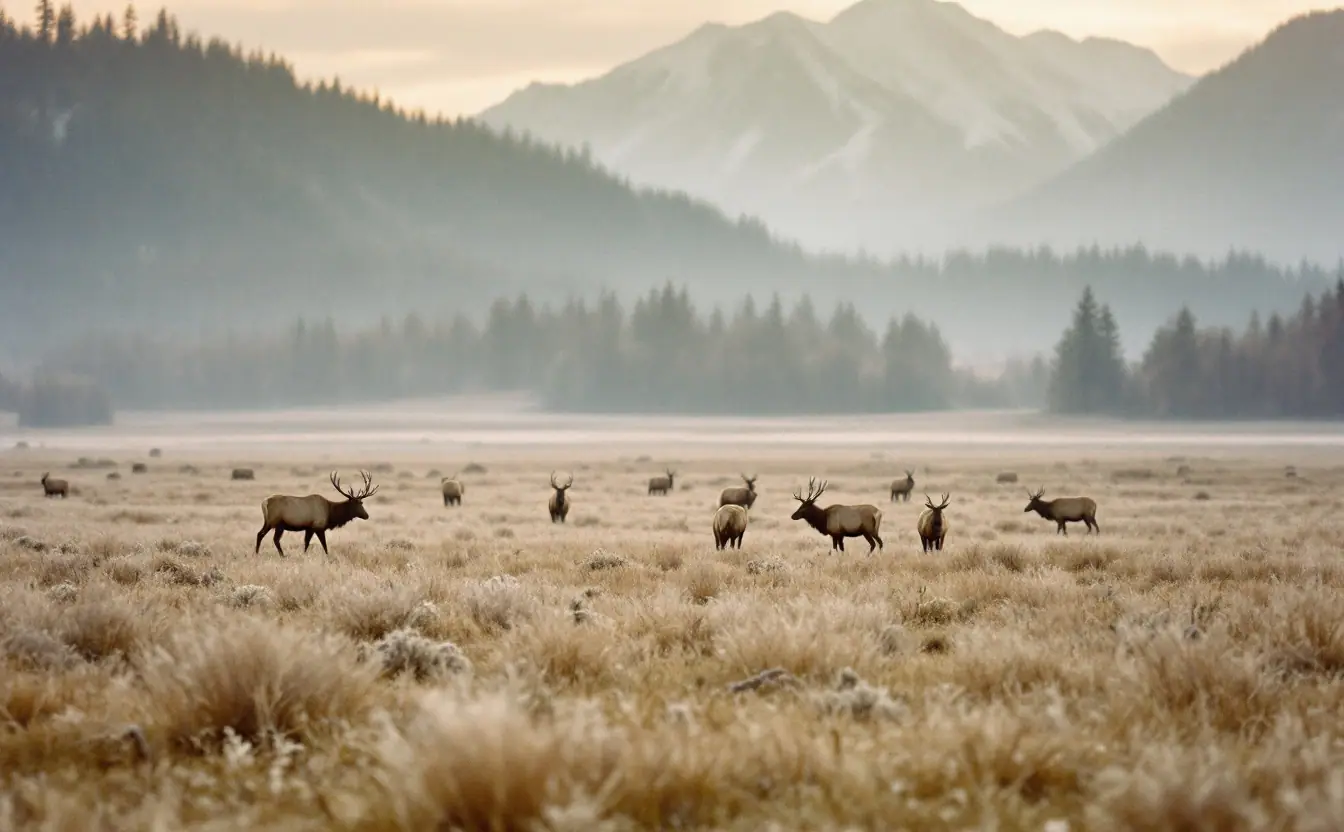
That is the hour to stay put and watch. A pale, floppy-winged bird lifts out of the grass and quarters back and forth low over it like an oversized moth: a short-eared owl, starting its night shift. Farther off, dark shapes drift out of a wooded hollow onto the open bench, heads down, grazing. Elk, in a region where elk were gone for well over a century, standing on ground that was once a working coal mine.
I grew up thinking of mine land as ruined land, and plenty of it carries real damage that I will get to. But the reclaimed grasslands of the coalfields, from Pennsylvania down through Kentucky and Tennessee and out to the high plains of Wyoming, have become some of the most interesting and most argued-over wildlife habitat in the country. They deserve a closer look than most of us give them from the highway.
How a mountain turns into a meadow
Surface mining strips away the soil and rock above a coal seam, takes the coal, and leaves a heap of broken rock and subsoil that miners call spoil. Since the late 1970s, U.S. coal mines have been required by federal law to regrade the ground they disturb and get plants growing on it again. The aim was stability: slopes that would not slide, and plant cover to hold the surface against erosion.
In the steep Appalachian coalfields, the usual way to get there for decades was to smooth and compact the spoil with heavy equipment, then seed it with fast, tough plants. Tall fescue and other pasture grasses went in, along with legumes such as clovers and sericea lespedeza, and often shrubs and trees chosen because they would grow almost anywhere: autumn olive, black locust, a few pines. The grass came up quickly and the slopes held.
What did not come back was the forest. Compacted spoil is hard for tree roots to break into, the original topsoil was often thin or missing, and a thick sod of aggressive grass shades out the seedlings that do arrive. The result, repeated across a great many sites, is grassland and scrub sitting in the middle of one of the richest hardwood forest regions on Earth, and on many of those sites it has stayed that way for decades.
The Midwestern coalfields of Illinois, Indiana and western Kentucky, and the older mining country of Pennsylvania and Ohio, have their own versions. Some reclaimed land there went back to row crops or pasture; some became rolling grass that looks a good deal like the prairie that region once had. In the West the story runs the other way. Big surface mines in Wyoming's Powder River Basin, and in Montana, North Dakota, Colorado and New Mexico, sit in country that was grassland and sagebrush to begin with, so reclamation there aims to put back something close to the native plant community and the animals that go with it.
The birds that found the grass
Before European settlement, open grassy ground in the Appalachians came in patches: river bottoms, burned ridges, mountain balds, fields kept open by Native American communities. As eastern farms were abandoned and grew back to forest over the twentieth century, and as the Midwestern prairie disappeared under the plow, birds that need big stretches of grass ran short of places to nest. Grassland birds as a group have declined across much of North America.
Some of those birds are fussy about size. They will not nest in a small hayfield hemmed in by woods, but they will settle into big, unbroken blocks of grass, which is exactly what reclaimed mines offer. Spend a June morning on one and you may hear:
- Henslow's sparrow, a secretive bird with an olive-tinged head whose entire song is a short, flat hiccup you could mistake for an insect. Reclaimed mines in Appalachia and the Midwest hold some of the most important nesting populations of this declining species.
- Grasshopper sparrow, which sings a thin, dry buzz from a fence post or weed stalk, very like the insect it is named for.
- Eastern meadowlark, yellow-breasted with a black V across the chest, whistling its slurred phrases from the top of a shrub.
- Dickcissel on Midwestern sites, and bobolink on some of the cooler, more northern ones.
Winter brings a different crowd. Northern harriers glide low on wings held in a shallow V, flashing a white patch at the base of the tail. Short-eared owls come down from the north and hunt voles at dusk. On the shrubby edges, where autumn olive and young trees crowd in, you find field sparrows, prairie warblers and yellow-breasted chats in summer, and in some higher, cooler places the golden-winged warbler, a bird of young, scrubby growth that has become scarce over much of its range.
Elk on the benches
Elk once ranged across most of eastern North America. Hunting and settlement pushed them out, and by the late 1800s they were gone from the East. Pennsylvania brought elk back to its northern forests in the early twentieth century. Starting in the late 1990s, elk were returned to the central Appalachian coalfields as well, first in eastern Kentucky and then in Tennessee, southwest Virginia and southern West Virginia.
The reclaimed mines are a large part of why that worked. Elk are grazers at heart, built for open country with cover close by, and the old mine benches give them broad grass flats with forest a short walk away, few houses and, on many sites, few roads. Herds use the open ground most at dawn and dusk and through the winter, when they gather in bigger groups. In early fall the bulls bugle, a rising, squealing whistle that carries a long way across an empty bench and sounds like nothing else in the eastern woods.
Out West, reclaimed mine land supports elk too, along with pronghorn and mule deer. Sagebrush is the slow part there. It can take a long time to re-establish on disturbed ground, and greater sage-grouse, which depend on sagebrush for food and cover, need far more than grass to come back.
A novel habitat, with real costs
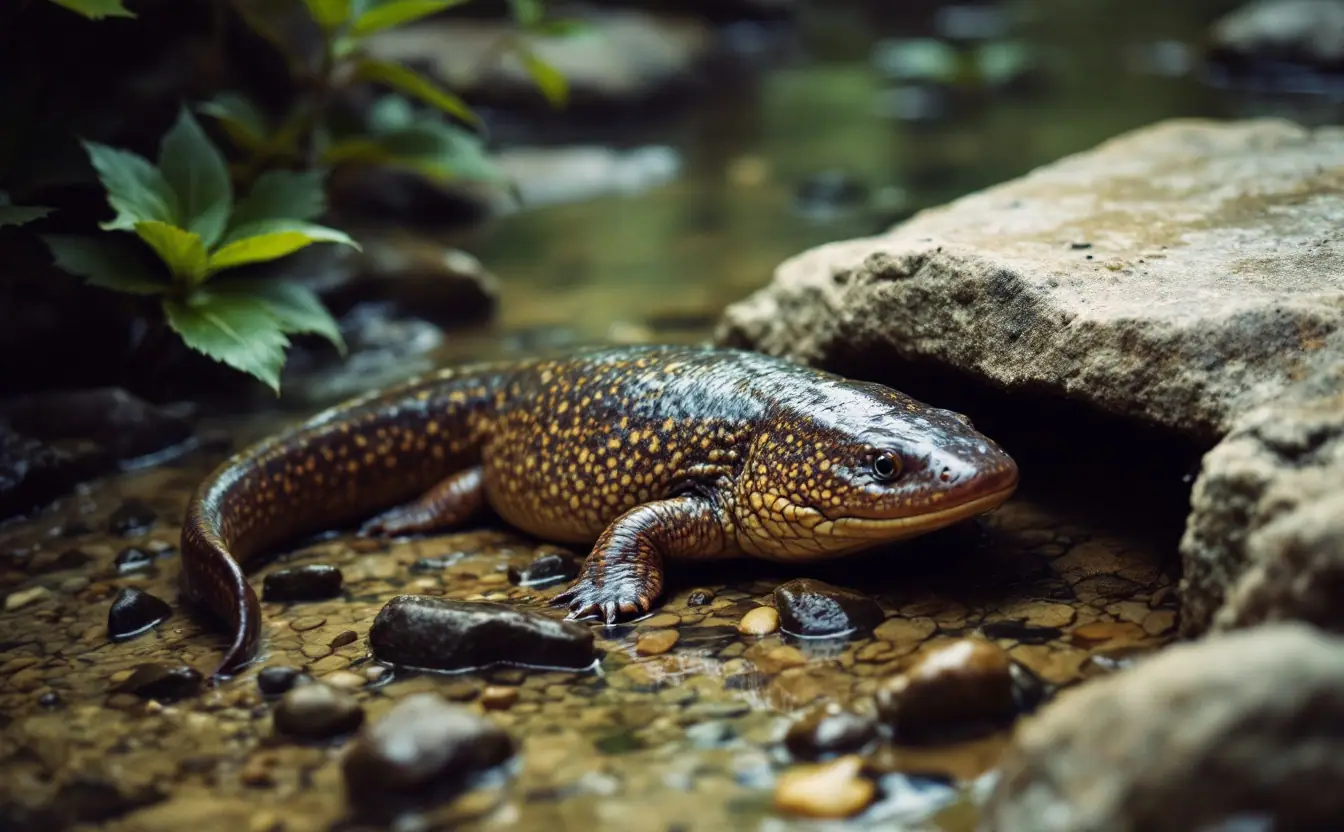
None of this makes surface mining a gift to wildlife, and I would be doing you a disservice if it read that way. What came off those mountains was mature forest, with all its salamanders, warblers and spring wildflowers. In central Appalachia much of the spoil was pushed into the heads of hollows, burying small headwater streams under valley fills, and water seeping out of fills and old workings can carry dissolved minerals that change stream life for miles downstream. Our piece on why some creeks run orange covers one of the most visible forms of that damage.
The plants used for reclamation have spread, too. Autumn olive and sericea lespedeza are now invasive across large parts of the East, and tree-of-heaven thrives on disturbed mine ground. Ecologists who study these sites often describe them as novel ecosystems: plant and animal communities that would not exist without us, and that may stay in their current state for a very long time.
That leaves a genuine argument among people who care about this land. Some want reclaimed sites returned to forest by ripping up the compacted ground, killing off the fescue and planting native hardwoods, in some places including experimental chestnuts bred to resist blight. Newer reclamation practice in Appalachia often leans that way, with looser, less-graded soil that trees can root into. Others point out that the grassland birds now nesting on old mines have few other places to go, and would like some of the grass kept. Both sides are describing something true, and walking a site you can often see the argument written on the ground, where a block of young oaks meets open grass.
Reading a site through the year
Reclaimed grasslands change character from month to month. Winter is the season for elk herds, harriers and short-eared owls, and for seeing the bare shape of the land without leaves in the way. In March, American woodcock spiral up over the openings at dusk and tumble back down in a twittering, chirping display flight. From May into July the sparrows and meadowlarks sing, butterflies work the clover and milkweed, and the open benches bake with no shade at all.
Fall brings bugling elk, migrating hawks riding the ridges, and goldenrod turning whole slopes yellow. Our field almanac has month-by-month notes on what to look and listen for.
Before you go: a checklist
Reclaimed mine land is beautiful and a little wild. It rewards some preparation.
- Find out who owns it. Much reclaimed land is private or company property, though some is open to the public as wildlife or recreation land. County parcel maps and public-land layers, the kind covered in our guide to maps and data tools, can tell you which is which. Respect posted ground and ask permission when unsure.
- Stay on established roads and tracks. Old haul roads may still carry heavy trucks, logging equipment or ATVs. Driving onto reclaimed slopes tears up the vegetation that holds them together.
- Give elk plenty of room. Use binoculars or a spotting scope, stay near your vehicle, and never walk toward a herd. Bulls in the fall rut and cows with young calves in late spring can be dangerous, and a calf lying alone in the grass has not been abandoned.
- Watch for highwalls. These vertical rock faces left above some benches can have loose, undercut edges, so keep well back from both the top and the base.
- Stay away from ponds. Sediment ponds and flooded pits often have steep, slick banks and cold, deep water.
- Dress for exposure. An open flat on a ridge is windier and colder than the hollow you drove up from, and there is little shade in summer.
- Check for ticks after walking through tall grass from spring through fall.
- Plan the drive out. Dusk is prime viewing, which means a dark trip back down rough gravel. Know your route before the light goes.
- Learn a few songs first. Henslow's and grasshopper sparrows are far easier to hear than to see, and a little practice with recordings beforehand turns a windy field into a conversation.
- Leave every gate the way you found it.
Then pick a spot on the edge of the grass, pour something hot from the thermos, and wait for the light to go. The owls keep their own schedule, but in my experience they are rarely late.
Hollow & Headwater is an independent publication. Nothing here is official guidance – for permits, rules or emergencies, go to the relevant public authority.