Best squirrel-proof bird feeders and heated birdbaths for winter
The best squirrel-proof bird feeder for most backyards is a weight-activated tube feeder, hung on a pole with a baffle, set where no squirrel can jump onto it. When a squirrel climbs aboard, a sleeve slides down under its weight and closes the seed ports, while a chickadee or a cardinal is too light to trip it. Add a mesh feeder for finches, a plain suet cage for woodpeckers and a heated birdbath for open water, and you have a winter station that feeds birds instead of rodents.
I should admit up front that no feeder is truly squirrel-proof. The gray squirrel in the big sycamore behind my house once spent most of a January morning hanging by its hind feet from the gutter, swinging like a pendulum toward a feeder I had thought was safe. It got there. What a good feeder in a good spot does is make the effort cost more than the squirrel is willing to pay, most days, and that is a contest you can win.
What kinds of winter feeders are there?
Most of what you'll find falls into a handful of types. Each suits certain birds and fails in its own particular way, so it helps to know them before you choose.
| Feeder type | Best for | Squirrel resistance | Watch out for |
|---|---|---|---|
| Weight-activated tube | Sunflower seed for chickadees, titmice, nuthatches, finches, cardinals | Good, especially on a baffled pole | Strict settings can shut out heavier birds such as jays |
| Caged tube | Small birds only | Good against squirrels and big birds | Cardinals and larger birds can't reach the seed |
| Plain tube or hopper | A wide range of seed eaters | Poor unless the pole is baffled | Squirrels can empty it in an afternoon |
| Mesh finch feeder | Goldfinches, pine siskins and house finches on Nyjer | Squirrels mostly ignore Nyjer | Seed spoils if it stays wet |
| Suet cage | Woodpeckers, nuthatches, chickadees, wrens | Fair; squirrels and raccoons like suet too | Starlings can crowd it |
| Heated birdbath | Every bird that drinks, which is all of them | Not an issue | Needs a safe outdoor outlet |
If you only buy one feeder, make it a sturdy weight-activated tube for black-oil sunflower seed. That seed draws the widest range of winter birds, and a well-built tube holds up to the animals that wreck flimsier feeders.
- Squirrel Buster Plus feederA weight-activated seed feeder that closes its ports when a squirrel climbs on; has a cardinal perch ring.
- Squirrel Buster Standard feederA smaller weight-activated feeder for sunflower and mixed seed.
These two came from reading the makers' published specifications and assembly instructions, then looking for what owners mention again and again over several winters: whether the ports close reliably, whether the feeder comes apart for cleaning, and how it stands up to chewing. Neither has been through lab trials here. The larger one has a ring perch that gives cardinals, which are clumsy on short pegs, a broad place to sit; the smaller one is fine for a narrow yard or a single hook.
How do weight-activated feeders keep squirrels out?
The idea is simple. The seed tube sits inside an outer sleeve held up by a spring. A bird's weight barely moves it, but a squirrel's weight pulls the sleeve down over the feeding ports, and the seed disappears behind metal. Many models let you change the spring tension, so you can set it to close for a squirrel but stay open for a pair of cardinals.
There are limits. A squirrel that hangs from the hanger above, rather than climbing onto the sleeve, can sometimes feed anyway, which is why the feeder belongs on a pole and not on a branch. A small, light squirrel may not always weigh enough to trip the mechanism at its gentlest setting. Raccoons and bears are another matter entirely, and we'll come to them.
Poles, baffles and the long jump
Placement does as much as the feeder itself. Hang it from a smooth metal pole with a baffle mounted below the feeder, either a wide cone or a stovepipe-shaped cylinder that a climbing squirrel can't get around. Then look at what's nearby. Squirrels jump farther than seems fair, so keep the pole well away from branches, fences, deck rails and roofs, and don't let a low limb hang overhead.
Some people also mix hot pepper into their seed or buy seed already coated with it. Birds don't sense the burn of capsaicin the way mammals do, so they eat it while squirrels tend to back off. It works in some yards and not in others, and you'll want gloves when you handle it.
Finch feeders and suet cages
Goldfinches spend the winter in dull olive-brown, and they arrive in chattering flocks that will empty a Nyjer feeder faster than you'd guess. Nyjer is a tiny black seed, so it needs either a tube with very small ports or a fine metal mesh the birds can cling to anywhere. Mesh lets more birds feed at once, and siskins and redpolls take to it happily in the winters when they come south. The catch is moisture: wet Nyjer clumps and molds at the bottom of the tube, so fill the feeder only part way and shake it out after a wet spell.
Suet is the winter fuel of woodpeckers. A plain wire cage that holds one cake is about the simplest feeder made, and downy woodpeckers, nuthatches, chickadees and Carolina wrens all use it. For a big woodpecker such as a pileated or a red-bellied, look for a longer cage with a tail prop, since those birds brace against a trunk with their stiff tail feathers. If starlings take over, an upside-down suet feeder, open only on the bottom, favors the birds that are comfortable hanging beneath it.
- Metal mesh finch feederA mesh tube for Nyjer seed that goldfinches and siskins cling to.
- Single-cake suet cageA plain wire cage for one suet cake, the simplest way to feed woodpeckers and nuthatches.
For this pair, the choosing rested on plain details: wire gauge and mesh size from the makers' listings, how the lids latch, and the patterns that turn up across owner reviews about rust and squirrel damage. Nothing here went to a lab. Both are simple enough that the main question is whether you can open and scrub them without a fight.
Why do birds need open water in winter?
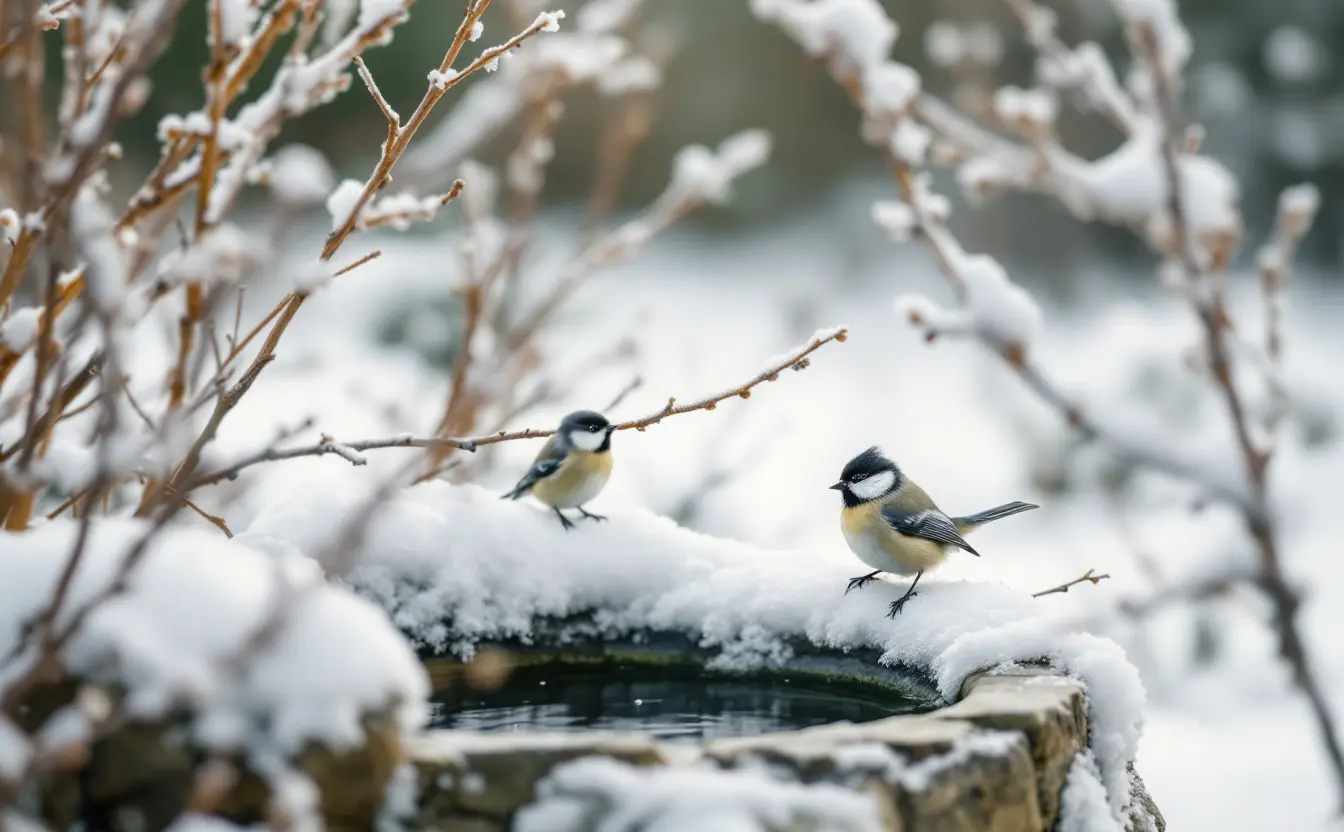
Birds can eat snow, but melting it costs body heat, and a chickadee's whole winter is a budget of body heat. In a long freeze, open water can be harder to find than food. A heated birdbath also helps keep feathers in order: birds bathe even in cold weather, and clean, well-preened feathers trap air and hold warmth.
Heated baths come in a few forms. A heated bowl sits on the ground or on a pedestal, a deck-mount model clamps to a railing where you can see it from the kitchen, and a separate de-icer can sit in a bath you already own. Good ones run on a thermostat that switches the heater on only when the water nears freezing. They aren't meant to make warm water, just water that stays liquid.
Look for these things in any heated bath:
- Shallow water, an inch or two at most, with a gentle slope from the edge.
- A rough or textured bottom so small feet can grip.
- A thermostat, so the heater isn't running on a mild afternoon.
- A cord long enough to reach your outlet without a splice in the middle of the lawn.
- A bowl that won't crack in a hard freeze. Concrete baths often split, so empty those for winter and let a heated bowl do the work.
- API heated birdbath bowl (20 in)A thermostatically heated bowl that keeps open water for birds through hard frosts.
- Deck-mount heated birdbathA heated bath that clamps to a deck rail or sits on a stand.
I picked these by reading what each maker says about its thermostat, wattage and cord, and by weighing what owners report after a full season, especially about heaters that quit in midwinter. Neither has been through laboratory testing on our part. The ground bowl suits a yard with a sunny spot near shrubs; the deck model suits anyone who wants to watch the bath from a chair with a cup of coffee.
Keeping the water open safely
Plug a heated bath only into an outdoor outlet with ground-fault protection, and use an extension cord rated for outdoor use. Keep the connection off the ground and away from puddles, and check the cord now and then, since squirrels chew. Never add antifreeze, salt or anything else to keep the water from freezing. Antifreeze is poison, salt water does birds no good, and the heater is there to do that job.
Where should winter feeders and baths go?
Run through this before you sink a pole into frozen ground.
- Mind the windows. Put feeders within about three feet of a window, so a bird that bolts can't gather speed, or more than about thirty feet away. The middle distance is the dangerous one.
- Give birds cover nearby. A native shrub or evergreen a short flight away lets them dodge a hawk, but not so close that a cat can wait underneath. Our green tips page has more on trading unused lawn for shrubs.
- Leave squirrels nothing to launch from. No branches, rails or roofs within jumping distance of the feeder.
- Put the bath in view. Near cover and in some sun, where you can see from inside whether it's open.
- Think about the ground. Hulls pile up under feeders. A spot you can rake easily, or a tray to catch spilled seed, saves trouble in March.
- Know your bears. Where bears are active, take feeders down. Many state wildlife agencies in bear country advise feeding only after bears have denned and bringing feeders in at the first sign of one in spring, or sooner in a warm spell.
Common mistakes
The first is hanging a squirrel-resistant feeder from a tree branch, which turns an engineered feeder into a squirrel ladder. The second is filling a Nyjer feeder to the top when goldfinches visit only once a day; the rest of the seed goes stale and wet. A third is leaving feeders and baths uncleaned all winter, which is how disease spreads among birds that crowd together.
The fourth is forgetting the window. A feeder fifteen feet from a big picture window can cause more trouble than it solves. Move it closer or farther, and break up the reflection on the outside of the glass with closely spaced decals or tape.
How do you clean feeders and birdbaths?
Clean feeders and baths every two weeks or so, and more often in a wet spell or if you see sick birds.
- Empty the feeder and throw out any clumped or moldy seed.
- Take it apart and scrub every surface with hot, soapy water and a bottle brush.
- Rinse or soak it in a solution of 1 part household bleach to 9 parts water.
- Rinse well in clean water.
- Let it dry completely before refilling, so the new seed doesn't mold.
- Scrub the birdbath the same way, rinse it, and refill it with clean water.
- Rake up hulls and droppings under the feeders.
If birds at your feeders look sick, with swollen eyes or fluffed feathers and sluggish behavior, take everything down for a week or two and clean it well before you start again. A spare feeder lets you swap one in on cleaning day.
For what's happening outdoors month by month, from northern finches moving south to the first spring migrants, see our field almanac. More of our writing about birds and habitat lives on the conservation and wildlife page.
Questions
Is any bird feeder truly squirrel-proof?
No. A determined squirrel will test every feeder you own. A weight-activated tube on a baffled pole, placed well away from anything a squirrel can jump from, keeps most squirrels out most of the time, and that is as good as it gets.
Is it safe to leave a heated birdbath plugged in all winter?
Most are built for exactly that, as long as you use an outdoor-rated cord and a ground-fault protected outlet and follow the maker's instructions. Check the cord for chewing now and then. Unplug the bath before you clean it.
Do I need to take my feeders down in bear country?
Yes, whenever bears are active. A feeder can teach a bear to visit houses, and that rarely ends well for the bear. Follow your state wildlife agency's advice on timing, since bears den later in mild places and may wake during a warm spell.
Will birds really bathe in freezing weather?
They will, and they seem to know their business. Bathing keeps feathers clean enough to insulate well, and birds shake off and preen quickly afterward. Your part is to keep the water shallow, clean and open.