Outdoor Recreation · Science & Explainers
Chasing fall color by elevation, from high ridges to valley floors
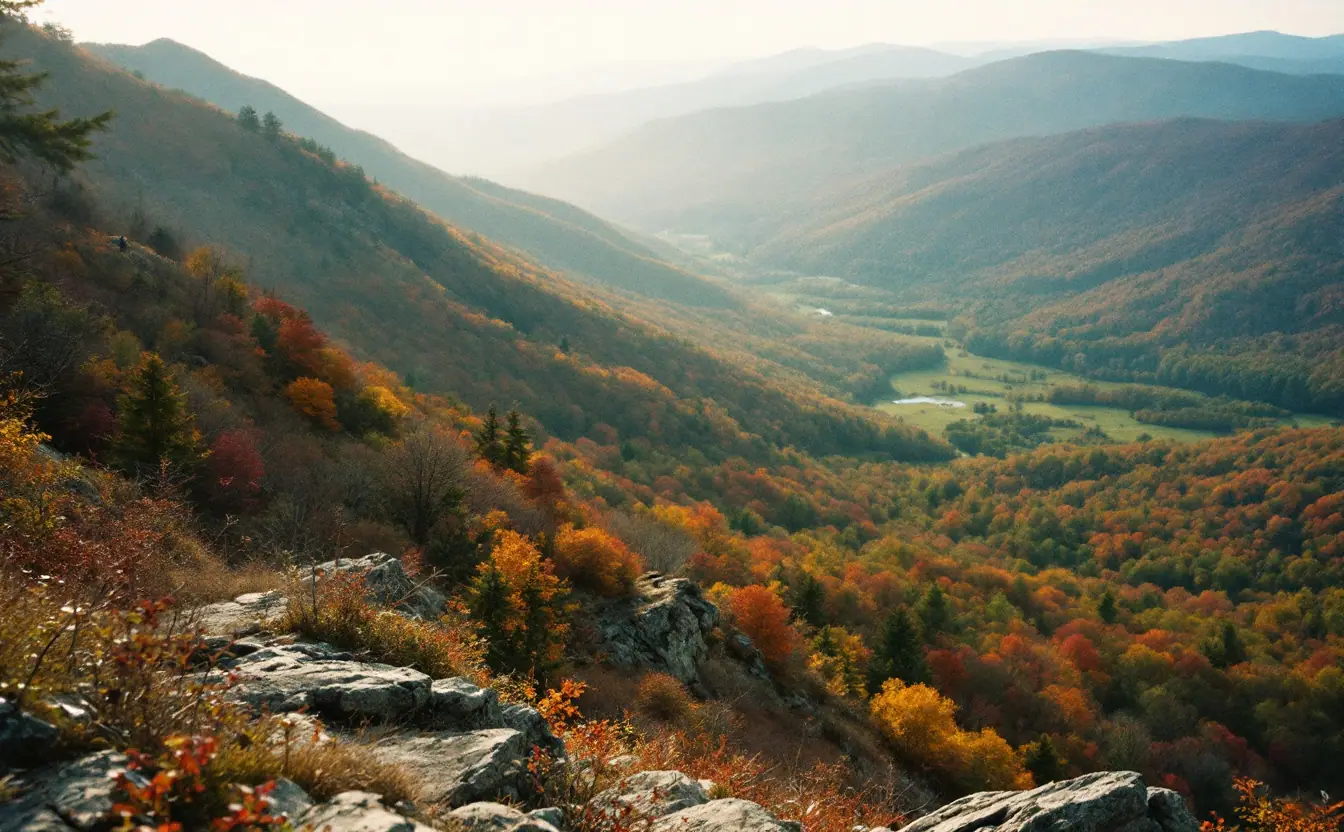
Every October I make the same mistake at least once. I drive to a famous overlook, find it already bare and gray, and stand there in a cold wind feeling like I missed the party. Then I drive twenty minutes downhill and find the party in full swing, maples lit up like stoplights along a creek.
Fall color doesn't arrive everywhere at once. It starts on the highest ground and moves downslope over a period of weeks, a slow wave of red and gold rolling from the ridgetops into the hollows. Once you understand why, you stop chasing a single "peak weekend" and start chasing an elevation band. That turns one good weekend into a whole season of them.
Why the top turns first
Leaves change because trees are shutting down for winter. As nights lengthen and temperatures drop, deciduous trees stop making chlorophyll, the green pigment that powers photosynthesis. As the chlorophyll breaks down, yellow and orange pigments called carotenoids, which were in the leaf all summer, finally show through. That's the gold of birches, hickories and tulip poplars.
Red and purple are a different story. Many trees, including red and sugar maples, sourwood, black gum, sassafras and dogwood, actively produce new pigments called anthocyanins in autumn. Bright, sunny days followed by cool nights tend to bring the most vivid reds, because sugars made during the day get trapped in the leaf as the tree seals off its connection to the twig.
Elevation enters through temperature. Air generally cools as you climb, on average a few degrees Fahrenheit for every thousand feet, though the rate varies with humidity and weather. Higher ground gets the cold nights first, so the trees up there start the process first. A ridge a few thousand feet above a valley can be living in a different week of autumn.
What else moves the calendar
Elevation is the big lever, but not the only one. Three other things push the wave earlier or later in any given spot.
Latitude
North turns before south. Northern New England, the Adirondacks and Michigan's Upper Peninsula typically color well before the Southern Appalachians. A century-old rule of thumb from phenology, worked out for spring crops, says seasonal events shift about four days for every degree of latitude or every 400 feet of elevation. It's crude, and fall is messier than spring, but it captures the right idea: climbing a mountain is a bit like driving north.
Slope and cold-air pockets
North-facing slopes are cooler and shadier than south-facing ones and often turn earlier. Valleys complicate things. On clear, calm nights, cold air slides downhill and pools in hollows, so a valley floor can end up colder than the slope above it. Many Appalachian mountainsides have a "thermal belt" partway up where nights stay milder than both the valley and the summit, which can leave a frost-nipped hollow, a still-green middle slope and a bare ridge all in one view.
The weather leading up to it
A dry late summer can stress trees into dull color or early leaf drop. An early hard freeze can kill leaves before they finish turning, and a warm, wet autumn tends to delay and mute the show. Sunny days and crisp nights through late September and October are what everyone hopes for.
A descent, band by band
Here's how the wave looks in the central and southern Appalachians, where you can drop several thousand feet in an afternoon's drive. The trees change as you descend, and so does the timing.
The high ridges
At the highest elevations, the hardwood mix often includes yellow birch, American beech, pin cherry and mountain ash, whose clusters of red berries outlast the leaves. Dark red spruce stays green, which makes the yellows pop. Color comes earliest up here and goes fastest, because wind on exposed ridges strips the trees quickly once leaves loosen. In the Great Smoky Mountains, color in a typical year starts on the highest peaks in late September or early October and spreads downslope through the rest of the month.
The middle slopes
This is the broadest band and usually the showiest. Sugar and red maples go orange and scarlet. Hickories turn a clean, buttery gold, tulip poplars go yellow, and sassafras, with its mitten-shaped leaves, runs through orange and pink. Watch the understory too: sourwood and black gum are among the first trees to turn deep red, sometimes while everything around them is still green, and dogwoods go a dusky red-purple.
The valley floors and river bottoms
Oaks dominate many lower slopes, and they turn late, in russets, browns and deep wine reds that can hang on into November. Sycamores along rivers fade to tan, their white upper limbs showing through. Sweetgums, where they grow, can carry half a dozen colors on the same tree. The season often stretches longest down here, and on a still morning with fog lifting off the river it can be the best of all.
The same trick, other mountains
The pattern holds wherever there's real relief. Only the cast of trees changes.
In the Colorado Rockies, aspen groves can turn gold as early as mid-September, high stands first, with the color sliding toward lower elevations over the following weeks. In the North Cascades, subalpine larches, conifers that drop their needles, go gold around the turn from September into October. In New Hampshire's White Mountains, the summits and notches turn ahead of the river valleys. In the Ozarks, where the relief is gentler and the forest leans heavily on oaks and hickories, the wave is shorter and later, often running into November. Even modest hills create pockets of earlier and later color if you know to look for them.
Planning a color chase
Once you think in bands, a trip plan gets simple. Pick a stretch of mountain where you can change elevation quickly, like a scenic road that climbs from a river to a ridge or a trail system with trailheads at different heights, and use it all season. Our field almanac is a handy month-by-month companion for what else is happening in the woods, and once you're out, this quick reference helps you decide where to go next.
| What you find | What it likely means | Where to go next |
|---|---|---|
| Ridges bare, middle slopes bright | You're right on time for the middle band | Drop to mid-elevation trails and overlooks |
| Ridges bright, everything below green | Early in the wave | Stay high now, and plan to come back lower in a week or two |
| Patchy, brownish color at every level | Drought, heat or an early freeze | Look for sheltered north slopes and stream corridors |
| Valley oaks bronze, everything above bare | Late in the wave | River trails and low roads; enjoy the last of it |
| Thick fog in the valley at dawn | Cold air pooled overnight | Climb above it for sunrise, come down after it burns off |
Elevation data is easy to come by. Topographic maps and many hiking apps show it, and our guide to public maps and data tools points to free sources. Park and ski-area webcams let you check the color from home before you burn a tank of gas, and for the Smokies, the national park's website is the place to check road and trail conditions before you go.
Popular roads get crowded on peak weekends. Go on a weekday if you can, start early, and settle for the second-most-famous overlook. There's usually one a mile away with half the cars.
Safety on short autumn days
Fall is the best hiking season in much of the country, and also the one that catches people out. Most of the trouble comes from a handful of predictable things.
Daylight runs short. Sunset comes noticeably earlier every week in October, and in a deep valley the sun drops behind the ridge well before the official time. Carry a headlamp even on a short hike.
Summits are colder than trailheads. The temperature drop with elevation works on you as well as on the trees. Add wind and a ridgetop can feel like a different month, so pack a warm layer, a hat and gloves.
Leaves hide hazards. A fresh carpet of leaves covers rocks and roots and turns slick when wet. Shorten your stride on descents and watch your footing on stone steps.
Hunting seasons overlap with leaf season. In many states, fall hunting seasons are already open by October. Check what's open where you're headed, and wear blaze orange on public land.
High roads can close. In the Rockies and the high Appalachians, an early snow can shut a pass or a summit road with little warning.
Before you leave, look up the forecast for the highest point on your route, not just the town at the bottom. Then go chase the color down the mountain. If you miss it on top, the next band down is waiting.
Hollow & Headwater is an independent publication. Nothing here is official guidance – for permits, rules or emergencies, go to the relevant public authority.