Community & Lifestyle · Science & Explainers
Brownfields explained: how old industrial sites get cleaned up and reused
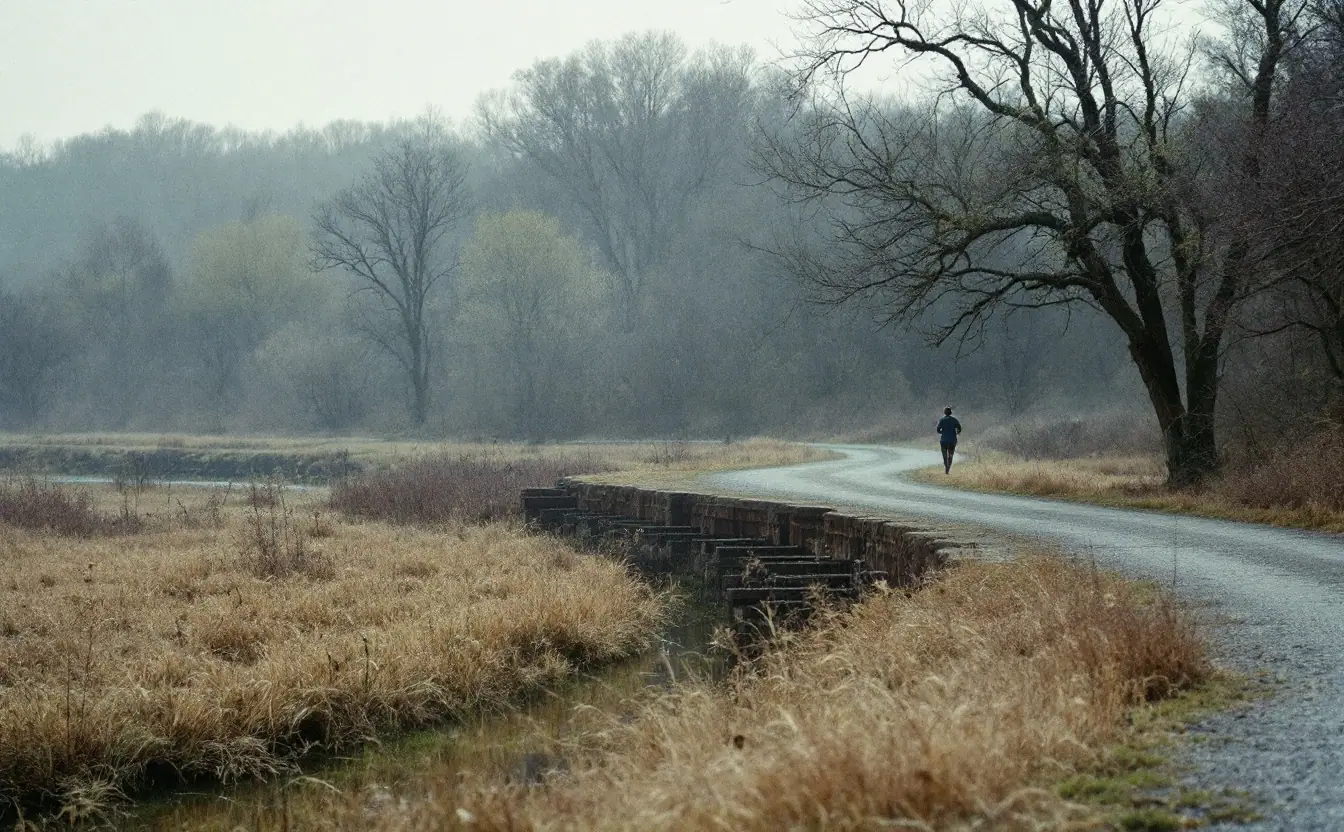
My usual long run follows a river path out of town, and about three miles in it crosses a stretch that doesn't quite look like a park. The grass is too even, mown flat across a broad terrace that used to be a rail yard. Concrete footings poke up along one edge, and every spring a few rusted spikes work their way up through the gravel shoulder. Beyond a chain-link fence on the far side sits the next lot over, still waiting: a cracked slab, a roofless block building, sumac and tree-of-heaven growing out of the loading dock.
Both are brownfields, or were. One got investigated, cleaned up and turned into a place where people run, fish and fly kites. The other is stuck. The difference is mostly testing, paperwork, money and time, and once you understand how that process works, you start spotting these lots in every town you pass through. You also know what to ask when the one down your street comes up for a new use.
What makes a lot a brownfield
The term gets used loosely, but the idea is simple: a property where real or suspected contamination makes it hard to sell, finance or reuse. The U.S. EPA's definition turns on the "presence or potential presence" of hazardous substances or pollutants. A brownfield doesn't have to be poisoned. It only has to carry enough doubt to make a lender, a buyer or a town council nervous.
The usual suspects are familiar. Corner gas stations with old underground tanks. Dry cleaners, whose solvents can sink through soil into groundwater. Machine shops and plating works, rail yards built on fill of cinders and ash, foundries, tanneries and the old coal-gas plants that left tar behind. Textile mills in New England and Carolina river towns, farm-chemical dealers on the Plains and, in coal country, land scarred by mining. The buildings bring their own baggage: asbestos, lead paint, transformers that once held PCBs.
By the EPA's long-running estimate, there are hundreds of thousands of these properties across the country. The most seriously contaminated sites go through the federal Superfund program, a different and much heavier process. Most brownfields sit at the other end of the scale, and plenty turn out to be in better shape than anyone feared once somebody actually tests them.
Why they sit empty
Uncertainty is the real problem. A developer can price a new roof. Nobody can price a cleanup until someone has drilled holes and sent samples to a lab, and nobody wants to pay for that on land they don't own. Lenders shy away from loans secured by property with unknown liabilities.
Liability adds another layer. Federal and state cleanup laws can hold an owner responsible for contamination they didn't cause. Changes to federal law in the early 2000s gave buyers some protection if they investigate properly before purchase and meet other conditions, which is one reason the early steps below are done so carefully. Even so, many lots sit for decades, sliding into tax delinquency, collecting dumped tires and drawing kids into buildings that aren't safe to explore.
From fence to reuse, step by step
Every state handles the details differently, but most projects follow a similar arc.
Phase I site assessment. This is research and a walk, with no digging. An environmental consultant pieces together the property's history from old aerial photos, fire insurance maps that show what buildings stood where, city directories and government records of tanks, spills and permits. Then they walk the site looking for stained soil, vent pipes from buried tanks, floor drains, drums and dead patches of vegetation, and they talk with people who know the place. In the U.S. most Phase I reports follow a standard practice published by ASTM International, and the result is either a list of conditions that suggest contamination or a finding that nothing turned up.
Phase II site assessment. If Phase I raises flags, sampling begins. Crews drill soil borings, install monitoring wells to check groundwater, set probes to measure vapors in the soil, and sample suspect building materials. Lab results are compared with screening levels to answer four questions: what's there, where it is, how much, and whether it's moving.
Setting cleanup goals. Modern cleanups are mostly risk-based. Contamination matters when it has a way to reach someone, so the work focuses on breaking the path between the source and the people or wildlife that could be exposed. The planned reuse drives the standard. Homes, schools and playgrounds need the most protective levels, because children may dig in the dirt every day for years, while a warehouse where adults spend working hours on pavement can often be cleaned to a different level.
The cleanup. Methods range from blunt to subtle. Excavators dig out hot spots and truck the soil to a licensed landfill. Caps of clean fill, pavement or a building slab seal what stays behind, often over a brightly colored marker fabric that warns future diggers. Under new buildings, vapor mitigation systems pull soil gas from beneath the slab and vent it above the roof, much like the fans described in our radon guide. Solvents in groundwater may be treated in place with injected chemicals or microbes, pumped out and treated, or left to break down under long-term monitoring.
Sign-off. Many states run voluntary cleanup programs in some form. An owner or developer enrolls a site, does the work under state review, and receives a closing document, often called a "no further action" letter or certificate of completion, that comes with some liability protection. Federal brownfields grants, which local governments, tribes and nonprofits apply for, often pay for the early assessment and planning.
Long-term care. When contamination stays in place, the site gets rules recorded with the property, sometimes called environmental covenants or deed restrictions: no drinking water wells, no residential use, no digging through the cap without a soil management plan. Caps need inspecting, vapor fans need to keep running, and monitoring wells need sampling. This is the step most likely to fail quietly years later, after the property has changed hands and nobody remembers what's under the grass.
What old lots become
Rail yards and riverside industrial strips often become trails and greenways, because they're long, flat and already follow the water. Seattle's Gas Works Park, built on the grounds of an old coal-gasification plant on Lake Union, kept the plant's rusting towers as a kind of sculpture garden, and its soils have needed ongoing management, which is a fair picture of how these parks work. Brick mills in river towns from Massachusetts to the Carolinas have turned into apartments, studios, breweries and climbing gyms.
Closed landfills and big industrial flats make a natural home for solar arrays. They're open and sunny, often close to power lines and roads, and panels can sit on weighted racks that don't punch through the cap. Community gardens on old lots usually grow in raised beds of imported clean soil, with a soil test through a university extension service as a cheap first step. Some of the largest disturbed sites in Appalachia are old surface mines, and the grasslands on some of them are a story of their own, told in our piece on life on reclaimed mine land.
Not every reuse is a win for the people who lived next to the problem. A cleanup to commercial standards leaves contamination in place, which is reasonable only as long as the controls hold. New parks and housing can push up rents and taxes in the very neighborhoods that put up with the fenced lot for decades. And public input sometimes arrives after the big decisions are made. Those are reasons to show up early, not reasons to leave a lot fenced forever.
Questions neighbors can ask
You don't need a chemistry degree to take part. You need good questions, asked early. Bring this checklist to a public meeting or put it in an email to the project team.
- What was the site used for, and over which years?
- Have Phase I and Phase II assessments been done, and can the public read the reports or a summary?
- What was found, where, and how deep? Has anything reached groundwater or moved off the property?
- What future use is the cleanup designed for: homes, a park, commercial buildings?
- Will contamination be removed, or capped in place? Who inspects the cap, and how often?
- What restrictions will be recorded on the property, and how will future owners learn about them?
- During the work, how will dust be controlled, will air be monitored at the fence line, and which streets will the trucks use?
- Are there private wells, basements or a creek nearby that could be affected, and will anyone test them?
- Is there a public comment period, and where is the project file kept?
- Which agency oversees the cleanup, and whom should neighbors contact if something looks wrong during construction?
Lab results in these reports read a lot like stream data, with units in micrograms per liter and qualifiers such as "<" and "J"; our guide to reading a water quality report decodes them. Many state environmental agencies keep searchable online records of cleanup sites, and the EPA's brownfields pages explain how the federal grants work. If a creek runs past the site, a volunteer monitoring group sampling above and below it can build a record before, during and after the work.
If you run, ride or explore near one
A fence around an old industrial lot is there for more than contamination. Abandoned buildings have rotten floors, open pits, loose roofing and sharp metal, and a lot that seems quiet in daylight is a bad place to fall through a floor alone. Stay out of fenced sites, even when there's a gap everyone seems to use.
On reused land that's open to the public, the rules are simple. Stay on the paths and lawns, don't dig, and skip foraging or fishing anywhere it's posted against. Rinse muddy dogs and kids' hands when you get home. If you notice erosion cutting into a cap, a sinkhole opening in a capped lawn or stained water seeping from a bank, take a photo and pass it to the agency that oversaw the cleanup or to the local health department.
Then finish the run. The best brownfield projects are the ones where, a few years on, the only clue left is a line of concrete footings at the edge of the grass and a runner slowing down to wonder what used to stand there.
Hollow & Headwater is an independent publication. Nothing here is official guidance – for permits, rules or emergencies, go to the relevant public authority.