Hiking during hunting season: blaze orange, timing and common sense
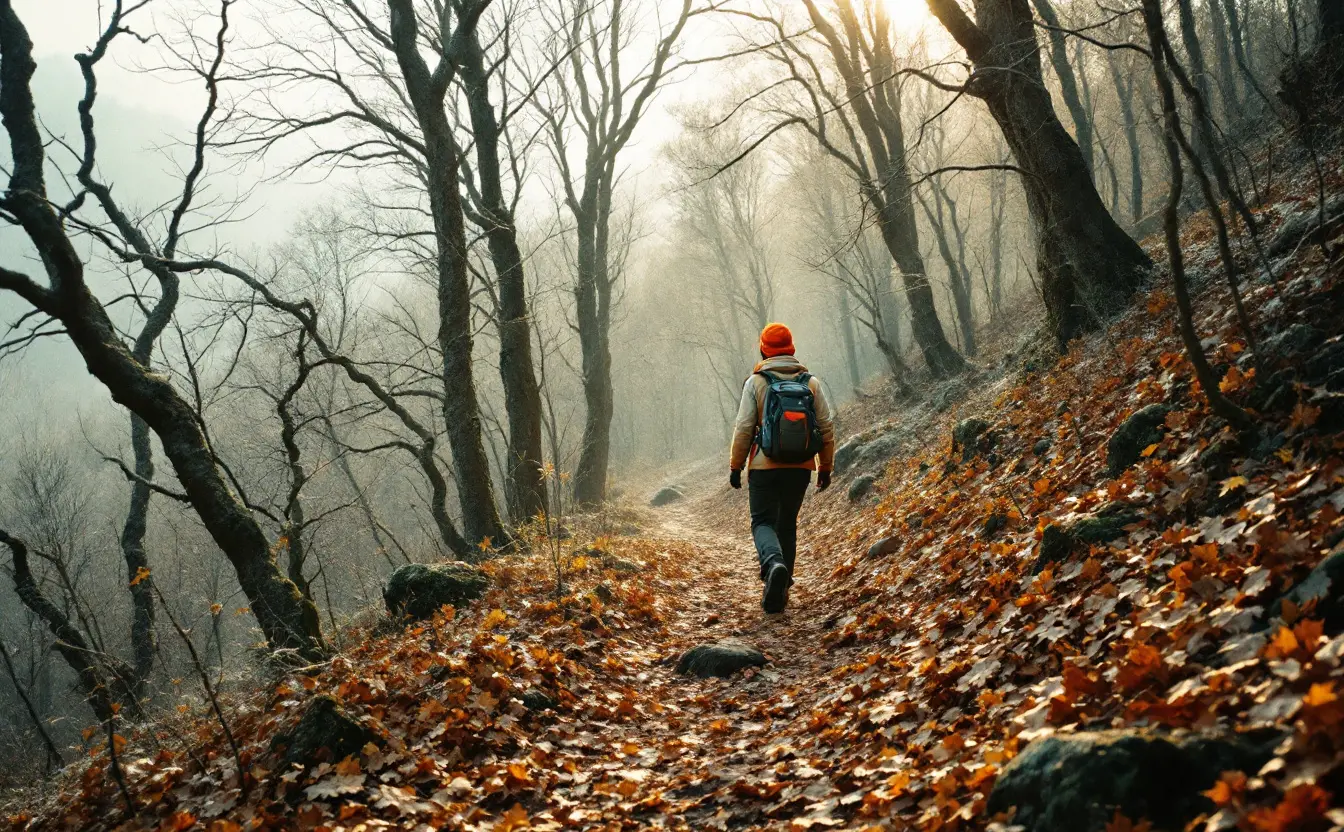
Late fall is the best hiking of the year in a lot of the country. The bugs are gone, the leaves are down, the views open up, and the air has that cold, clean bite that makes a long climb feel easy. It's also when the woods fill up with people who are sitting very still, dressed to blend in, watching for movement.
Hunters and hikers share a great deal of public land, and the vast majority of those encounters are a nod and a quiet "morning." Incidents involving non-hunters are rare. But a little planning removes most of the risk that's left, and it makes you a better neighbor to people who have every right to be there. Here's how I think about it, followed by the checklist I actually use.
Where and when hunting happens
The first surprise for many hikers is how much land is open to hunting. Most national forests and Bureau of Land Management lands allow it, as do state forests, state game lands and wildlife management areas, many county and state parks for part of the year, and of course a lot of private land that trails cross by agreement. Long-distance routes like the Appalachian Trail pass through plenty of ground where hunting is legal. Most national parks don't allow hunting, though there are exceptions, including some national preserves and recreation areas, so check the page for the specific unit.
Seasons are a calendar, not a single week. Depending on the state and the animal, something may be in season from late summer through winter, plus spring turkey seasons. Archery deer seasons often run for weeks or months in fall. The busiest woods in much of the East and Midwest usually come with the firearms deer season, often somewhere in November or December, and opening days in particular can bring a lot of people out at once. In the West, elk and deer rifle seasons tend to cluster in fall, and some mountain areas see more hunters than hikers in October.
All of this varies by state, by species and by the specific piece of land, and it changes. Before a fall trip, look up your state wildlife agency's current hunting regulations and season calendar, and the rules for the property you're visiting. A few minutes of reading tells you if you're walking into an opening morning or a quiet Tuesday.
About these links: some go to Amazon and partner shops and may earn us a commission. As an Amazon Associate I earn from qualifying purchases.
Why orange works
Hunter orange, or blaze orange, is the fluorescent shade that seems to glow even under a gray sky. Many states require hunters to wear a minimum amount of it during firearms seasons, and some now allow fluorescent pink as an alternative. The color works because of a quirk of eyesight. Deer see color differently than we do and don't pick out orange from greens and browns the way people do, while to a human eye it jumps out of the woods from a long way off.
For a hiker, the point is simple: you want to be unmistakably a person from every angle. A hat alone shows from the front and sides. A hat plus a vest or jacket shows from all around, including from a stand above you. A pack cover helps when your back is to the woods, which on a trail is most of the time.
 Carhartt knit watch cap in bright orangeA warm knit cap in bright orange that keeps you easy to see on the trail during hunting season.Details at Amazon ›
 Black Diamond Spot 400 headlampA AAA headlamp with a red night mode for short winter afternoons and pre-dawn starts on the trail.Details at Amazon ›
- Muck Boot Company bootsWaterproof rubber boots for mud, wet trails, creek banks and barn chores.At Muck Boot ›
The checklist
This lives in the lid of my day pack from mid-October on. None of it is complicated, and most of it costs nothing.
Before you leave
- Look up the season. Check your state wildlife agency's current calendar for the dates and areas you'll be in. Opening days and weekends tend to be the busiest.
- Check the land rules. Find out whether hunting is allowed where you're going, and on which days. Some places limit hunting on Sundays or close certain trails during a season.
- Consider a different trailhead. On the busiest days, a park or preserve that's closed to hunting, a town trail network or a rail-trail through farmland can be a better plan.
- Pack the orange. A fluorescent orange hat and a vest or jacket for every person, plus something for the dog.
- Tell someone your route and return time. That's good practice all year, and more so on short fall days.
What to wear
- Orange on top and around the torso. Visible from the front, back and sides.
- Skip white and tan. A flash of white mitten or a white hat can read as the underside of a deer's tail at a glance. Brown, tan and gray coats are fine with orange over them, risky without.
- No antlers, no fur trim. Seems obvious; worth saying.
- Bright pack or pack cover. Your back faces the woods more than your front does.
On the trail
- Hike in the middle of the day when you can. Deer move most around dawn and dusk, so that's when hunters are most alert and most likely to be in position.
- Stay on marked trails. Hunters generally expect people on trails and set up away from them. Wandering off through the brush is how you end up where nobody expects you.
- Be heard. Talk with your partner, whistle, let a trekking pole tick on rocks. You aren't trying to sneak up on anything.
- If you hear shots nearby, speak up. Call out in a loud, clear voice that you're on the trail. Don't duck for cover in the brush, where you're harder to see.
- If you see a hunter, say hello. A normal voice is enough. Don't wave your arms wildly or come at them through the trees; let them see you and keep moving.
- Run differently. Trail runners move fast and quietly, which is exactly the problem. Wear more orange than you think you need, stick to busy trails, and keep runs to midday on the heavy weeks.
With a dog
- Orange on the dog. A vest or a bright bandana and collar. A brown dog trotting through brown leaves can look a lot like something else.
- Leash it. A dog crashing off after a deer ruins a hunt, can be illegal in some places, and puts the dog itself at risk.
- Watch for traps. Some states allow trapping on public land in fall and winter. Keep the dog close and on the trail, and learn what your state's rules are.
Courtesy
- Leave gear alone. Tree stands, ground blinds and trail cameras belong to someone. Walk past.
- Park considerately. Don't block gates or the pull-off spots hunters use before dawn.
- Respect posted land. If the trail crosses private ground, stay on it.
- Don't interfere. Deliberately disrupting a lawful hunt is illegal in most states, and it's no way to treat people sharing the woods. If you have a real problem, take it to the land manager.
A few things that don't make the list
Some advice floats around that I wouldn't lean on. Wearing a single orange hat and calling it done is better than nothing, but it's a small patch of color on a tall, moving shape. Bells on packs are fine but easy to lose in the wind. And the idea that hikers should simply avoid the woods all fall gives away the best weeks of the year for no good reason. Plenty of hunters hike, plenty of hikers hunt, and the woods are big.
It's also worth remembering that hunting season is only one of the late-fall hazards. Daylight runs short, temperatures drop hard after sunset, and a wet leaf on a sloping rock is as slick as ice. Our piece on chasing fall color by elevation has a section on planning around shorter days that applies to every trip from now through winter.
Reading the woods in November
Hunting seasons sit on top of a natural calendar that hikers can read too. In much of the East, November brings the deer rut, when bucks move more in daylight and you're more likely to see scrapes, rubbed saplings and deer crossing trails at odd hours. Squirrels are frantic with nuts. Owls start calling on long evenings. The field almanac follows what's happening outdoors month by month, and it's a good companion for knowing what you might meet out there, on four legs or two.
If you want a wider look at trips, skills and trail safety for every season, our outdoor recreation page collects them in one place. For hunting-season trips on federal land, the U.S. Forest Service has pages for each national forest where you can check local conditions and closures.
The best fall hike I know is a ridge walk on a still morning when the frost hasn't burned off yet. I wear the same orange hat I've had for years, faded a little on top, and a vest over my jacket. Somewhere below, someone in a stand watches me cross the saddle and goes back to waiting. That's the whole arrangement, and it works.