Conservation & Wildlife · Water & Rivers
How beavers rebuild wetlands, one dam and one valley at a time
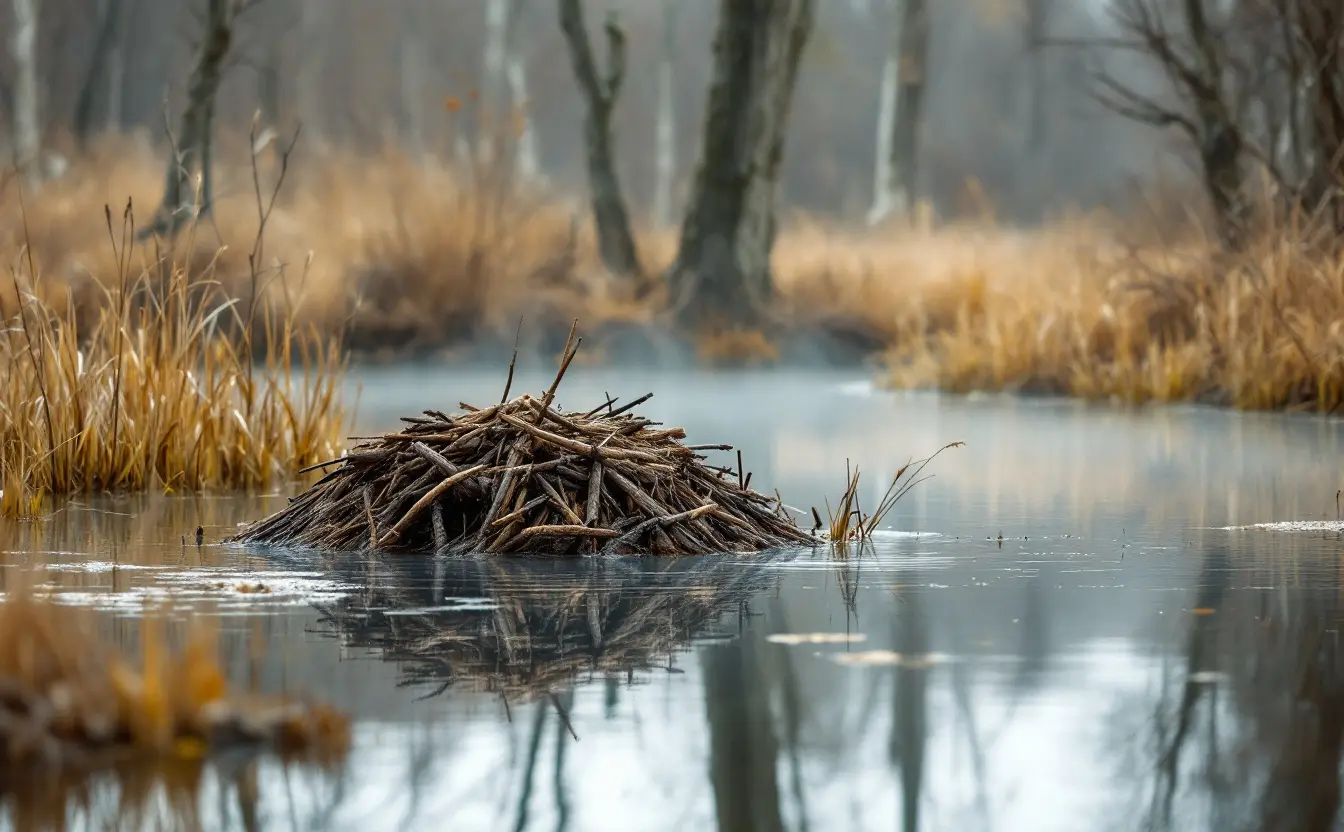
On a cold November evening at a beaver pond, the first thing you usually notice is a sound, not an animal. Somewhere out on the dark water a branch is being dragged, then there's a soft splash, then a long silence. If you wait, a V-shaped ripple slides across the pond with a blunt brown head at its point, towing a leafy stem of willow toward the lodge. The beaver is stocking its pantry, and it has a deadline. Once ice closes over the pond, that pile of branches is all it will eat until spring.
Few animals besides us rebuild whole valleys to suit themselves. Beavers do it with sticks, mud and stubbornness. Instead of describing that in the abstract, I'd like to walk you through one valley, step by step. It's a composite rather than a particular place, put together from patterns that show up from the Adirondacks to the Rockies, but every stage in it is ordinary beaver behavior.
The valley before
Picture a small, cut-down creek in a wooded valley. It runs fast and narrow between steep banks, dug a little deeper every flood. In spring it roars; by late summer it's a trickle between stones. The floodplain beside it, once soggy, has dried out enough for maples and alders to grow right to the edge. Rain that falls here leaves in a hurry.
A lot of North American creeks looked like this by the early twentieth century, and many still do. The fur trade had trapped beavers out of huge parts of their range, and with the beavers went their dams. Over the following decades, trapping limits and reintroductions brought them back to much of the continent. In one famous effort in the late 1940s, wildlife managers in Idaho even dropped live beavers by parachute, in boxes built to open on landing, into remote backcountry. Our valley has been empty of them for a long time.
About these links: some go to partner shops and may earn us a commission.
Stage one: a young pair arrives
Beavers live in family groups: an adult pair, the kits born that spring, and the previous year's young. At around two years old, the young usually leave home, often in spring, and travel along waterways in search of an empty stretch of creek with the right mix of slow water and edible trees. Some travel a long way.
Two of these wanderers find our valley. What draws them is food, especially willow, aspen, alder, cottonwood and birch, whose inner bark beavers eat, plus water deep enough to hide in. What holds them is the shape of the creek: a narrow spot where a dam would back water up across a wide, flat floodplain.
Stage two: the first dam
Beavers seem to build in response to the sound and feel of moving water. In classic experiments, recordings of running water set them to piling sticks over the speaker. In the creek, they start at a narrow point, wedging sticks into the streambed, then layering branches, stones, mud and plant material, plastering the upstream face as they go. Their front teeth never stop growing, and the orange color comes from iron in the enamel, which makes the cutting edge harder.
The first dam may be small and leaky. That's fine. Within days, water spreads back upstream, the current slows and sediment starts to settle. The pair keeps adding to it, patching every gap that gurgles.
Stage three: the pond, the lodge and the pantry
As the pond deepens, the beavers build a lodge, a dome of sticks and mud with underwater entrances and a dry chamber inside, just above the waterline. On a frosty morning you can sometimes see a thin wisp of breath-warmed air rising from the vent at the top. Where the banks are high and the water is big, beavers often skip the dome and dig bank dens instead.
By late fall the work changes. Beavers don't hibernate, and they can't easily get out of an iced-over pond to eat, so they build a food cache: a raft of cut branches pushed into the mud near the lodge entrance, its upper layer often locked into the ice once the pond freezes. All winter they swim out under the ice, pull a stick from the pile, and carry it back to eat inside. That's the work going on at dusk in November, and why you hear so much dragging and splashing.
Stage four: the neighbors move in
A few years in, the valley looks nothing like it did. The creek is now a chain of ponds stepped down the valley behind several dams, with side channels and soggy margins between them. The water table under the floodplain has risen. Trees that couldn't tolerate flooding are dying where they stand.
To a lot of other animals, this is an invitation.
| What changed | Who shows up |
|---|---|
| Still, open water | Wood ducks, hooded mergansers, muskrats, painted turtles |
| Shallow, plant-filled edges | Green frogs, wood frogs, spotted salamanders, dragonflies and damselflies |
| Standing dead trees | Woodpeckers, then tree swallows and other cavity nesters in old holes; herons may build nest colonies |
| More fish and frogs | Great blue herons, belted kingfishers, river otters, mink |
| Wet meadow and sedge margins | Swamp sparrows, red-winged blackbirds, voles, and the owls and hawks that hunt them |
| Slow, cold side channels (in the West) | Juvenile salmon and trout that shelter and feed through winter |
The ponds also change how water moves. Instead of rushing off, rain and snowmelt spread out, seep into the ground and drain slowly over weeks. Sediment and some nutrients settle behind the dams. Streams below beaver complexes can keep running longer into dry seasons, though the effects vary from place to place, and ponds can warm water that some coldwater fish need. In the arid West, researchers have documented beaver-flooded valley bottoms that stayed green while wildfire burned the slopes around them.
They don't stop floods in steep country, and they aren't a substitute for good land use. But by slowing water across a whole valley, beavers can blunt the sharp peaks that make small creeks dangerous after heavy rain, the kind of runoff we explain in our piece on flash floods in steep terrain.
Stage five: the beavers leave, and the meadow arrives
Eventually the family eats through the reachable trees. They forage farther from the water, which is riskier, and in time they move on to a fresh stretch of creek. Without upkeep, the dams spring leaks, and one big storm breaches the main one.
What drains out leaves something remarkable behind: a flat of dark, fine sediment that years of still water deposited. Sedges, rushes and grasses take over fast. This is a beaver meadow, and it can be one of the richest open habitats in a forested landscape, full of sparrows, deer, bear, butterflies and wildflowers. Alders and willows creep back in from the edges. When enough food returns, beavers often come back and the cycle starts over.
Played out over decades and across a whole watershed, those cycles produce a mosaic: active ponds, old meadows, young thickets and mature forest, all in one valley. That patchwork is what many creeks lost when the beavers disappeared.
The same work, other regions
In the Pacific Northwest, beaver ponds and side channels are prime winter habitat for young coho salmon. In parts of the interior West, restoration crews build "beaver dam analogs," lines of wooden posts woven with willow, to slow eroding creeks enough that beavers will move in and take over the work themselves. In the Great Lakes states and New England, beaver ponds dot the northern forests and are a reliable place to see moose, herons and otters. In the Southeast, beavers have spread back through river bottoms where they had long been absent.
Living with the builders
Beavers and people don't always agree. Ponds can flood roads, plug culverts and drown trees someone was fond of. Many of those conflicts have practical fixes. Flow devices, essentially pipes run through a dam with a protected intake, hold a pond at a set level. Fences built around culvert inlets keep beavers from plugging them. Wrapping prized trees with welded wire, or painting trunks with a gritty sand-and-latex mix, discourages chewing. Where removal is still needed, it's handled under state rules, so check with your state wildlife agency.
If you hike near beaver ponds, treat the water before drinking it. The parasite giardia is sometimes called "beaver fever," though many mammals, people included, carry it.
Watching a pond at dusk
Find a pond with fresh sign: pale chewed stumps shaped like sharpened pencils, peeled sticks floating at the edge, a dam with fresh mud on its face. Arrive half an hour before sunset, sit downwind and well back from the lodge, and keep still. If a beaver catches your scent or sees you move, it may slap its broad tail on the water with a crack like a dropped board, then dive. Wait. Curiosity often brings it back.
The field almanac is a good guide to what else stirs at ponds through the cold months, and our conservation and wildlife page gathers more pieces on animals that shape their habitats. On a calm night in late fall, with the last light fading off the dead snags, the pond will tell you how busy it is if you give it enough quiet.