Air & Climate · Sustainable Living
Battery backup for a gas furnace: best power stations, sizing, hookup

For most households that want a furnace to keep running through an outage, the right battery backup for a gas furnace (or an oil one) is a power station, because it makes no exhaust and can sit indoors beside the furnace. A unit of about one kilowatt-hour, such as the Jackery Explorer 1000 v2 (about 1,070 watt-hours of storage and 1,500 watts of output), covers the running draw of many household furnaces for part of a cold night. If your outages are measured in days, look at the larger and expandable power stations from EcoFlow and BLUETTI, ideally paired with solar panels. Whichever you choose, the furnace connects through an electrician-installed transfer switch or inlet, or a code-compliant cord and plug where allowed, never an improvised cord.
About these links: some go to Amazon and partner shops and may earn us a commission. As an Amazon Associate I earn from qualifying purchases.
Field shortlistMid fall
 Jackery Explorer 1000 v2 power stationA battery power station of about one kilowatt-hour for lights, a fridge and, with the right hookup, a furnace blower.See it at Amazon ›
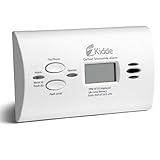 Kidde battery carbon monoxide alarmA battery CO alarm for the room with the stove and near sleeping areas.See it at Amazon ›
 Midland WR120B weather alert radioA NOAA weather radio that sounds an alarm for warnings in your county, with battery backup.See it at Amazon ›
Anyone who has run field instruments off batteries learns early that the number on the box is a ceiling, and what you actually get depends on the load, the cold and the losses in between. So this guide leans on arithmetic. Bring a flashlight to the furnace and a pencil to the kitchen table.
Why does a gas or oil furnace stop when the power goes out?
The flame runs on gas or oil, but nearly everything around it runs on electricity. A modern gas furnace needs power for the draft inducer fan that clears the flue before ignition, the hot-surface or spark igniter, the control board that supervises the flame, and the blower that pushes warm air through the ducts. An oil furnace adds a burner motor and fuel pump. Hot-water boilers need power for their circulator pumps and controls. Cut the electricity and the sequence stops at step one, however much fuel is waiting in the line.
That's also the good news. Next to the heat a furnace delivers, the electrical load that runs the machinery is small, which is why a battery can carry it at all.
How do you size a power station for your furnace?
Two numbers matter: how much power the furnace draws while it runs, in watts, and how much energy the power station stores, in watt-hours. The first decides whether the station can run the furnace at all; the second, for how long.
Start at the furnace. Turn it off at its service switch, take off the front panel and find the rating plate, a metal or foil label on the cabinet or inside the door. It lists the voltage and an amp figure, often marked as total or maximum amps.
- Watts are roughly volts times amps. A plate that reads 120 volts and 7 amps works out to about 840 watts. Those are example numbers; use the ones on your own plate.
- The plate figure is a ceiling. The furnace usually runs below it. An electrician with a clamp meter can measure the real running draw while they're there to install the inlet.
- Startup draw is higher. Older-style blower motors pull several times their running current for a moment as they spin up; variable-speed blowers ramp up gently. The station's surge rating has to cover that kick, and its continuous rating the running load, with room to spare.
- Check the waveform. Furnace control boards and variable-speed motors are fussy about the shape of the power they get. Look for pure sine wave output on the spec sheet.
Then the run time: divide the station's watt-hours by the furnace's running watts, then multiply by an efficiency allowance for the losses in turning battery power into household current. I use 0.85 as a working assumption; 0.8 is the cautious choice. The table runs three example loads through the Jackery's figure of about 1,070 watt-hours. The loads and the "half the time" column are assumptions for illustration, not measurements.
| Example running draw | Blower running nonstop | Furnace cycling half the time |
|---|---|---|
| 300 W | about 3 hours | about 6 hours |
| 500 W | about 1.8 hours | about 3.6 hours |
| 800 W | about 1.1 hours | about 2.3 hours |
Worked through for the middle row: 1,070 Wh ÷ 500 W × 0.85 ≈ 1.8 hours of nonstop running. If the blower runs half the time on a cold night, the same battery stretches to about 3.6 hours. Colder nights mean more running, and the inverter draws a little power just by being on, so treat the table as the optimistic end.
If those hours look short for a January night, that's the arithmetic being honest with you. The fixes are a bigger battery, add-on batteries, recharging during the outage, or a thermostat set a few degrees lower. A tighter house holds heat longer between cycles too; our green tips cover the dull, effective work of sealing drafts.
Which power stations make sense for a furnace?
Here is what matters, roughly in order:
- Continuous output comfortably above your furnace's running draw, and a surge rating that covers startup.
- Capacity in watt-hours to match your outages: a few hours after a thunderstorm, or three days after an ice storm.
- Expandability. Some power stations accept add-on batteries, which lets you start smaller and grow.
- Recharging options: wall, solar and car inputs.
- Pure sine wave output and an AC outlet that suits the cord your electrician plans to run from the inlet.
- Cell chemistry. Lithium iron phosphate is common in newer units and is generally rated for more charge cycles than older lithium-ion types.
- Jackery Explorer 1000 v2 power stationA battery power station of about one kilowatt-hour for lights, a fridge and, with the right hookup, a furnace blower.Details at Amazon ›
- EcoFlow portable power stationsBattery power stations with solar input for outages after storms and floods.At EcoFlow ›
- BLUETTI power stationsBattery power stations and solar panels for storm outages: lights, a fridge, phones and a furnace blower.At BLUETTI ›
Nobody unplugged a furnace in January to choose these three. I went through each maker's published capacity and output figures, their manuals on what a station can be wired to, and the complaints owners repeat after a few real outages. None of the three has been on a load bank of mine, so check every figure against your own rating plate.
The Jackery Explorer 1000 v2 is the straightforward pick for a typical furnace plus a few small loads: about 1,070 watt-hours and 1,500 watts in one portable unit. EcoFlow and BLUETTI both make a range of power stations, from small carry-around units to large ones that take add-on batteries, and both sell solar panels to pair with them. If your outages run longer than a night, compare their larger models; BLUETTI's power stations and solar panels are one place to start.
How does the furnace connect to the power station?
Most furnaces are hardwired: a cable runs from the breaker panel to a service switch near the cabinet, with no plug anywhere. That's why the hookup is an electrician's job. There are a few legitimate ways to do it:
- A transfer switch with a power inlet. An electrician installs a small transfer switch for the furnace circuit, or a few chosen circuits, plus an inlet box for the power station's cord. The switch disconnects those circuits from the utility before connecting the battery, so power can't flow back out to the street.
- A single-circuit furnace transfer switch. The same idea, mounted at the furnace.
- A cord and plug, where the local code allows it. Some places let a furnace be fitted with a cord and plug into a dedicated receptacle, so in an outage you move the plug from the wall to the power station. Whether that's allowed where you live is a question for a licensed electrician who knows the local code.
Two things are never acceptable. Never backfeed the house: a double-ended "male to male" cord into a dryer outlet or any wall receptacle sends power backward through your panel and, unless the main breaker is off, out onto the utility lines, where it can kill a line worker who believes the line is dead. And never improvise at the furnace by cutting into its supply cable, splicing on a plug yourself or running an extension cord to loose wires.
One quirk is worth raising with the electrician: some furnaces refuse to light on backup power because their flame sensor depends on correct polarity and grounding, which a portable source doesn't always provide; a proper installation accounts for it.
How do you recharge during a long outage?
- From the wall, before the storm. Keep it charged and top it up every few months. A unit forgotten in a closet since spring may not be full when the ice arrives.
- From solar panels, after it. Winter sun is low and the days are short, and snow on a panel stops it cold. Treat solar as a way to stretch a multi-day outage, not a promise.
- From a car. A 12-volt socket charges slowly, more trickle than refill. Run the car outdoors only, never in a garage, even with the door up.
- From a fuel generator outdoors. Some households run one a few hours a day just to refill the battery.
Battery power station or fuel generator?
| Battery power station | Portable fuel generator | Standby generator | |
|---|---|---|---|
| Where it runs | Indoors, beside the furnace | Outdoors only, well away from doors, windows and vents | Outdoors, permanently installed |
| Exhaust | None | Carbon monoxide | Carbon monoxide |
| How long it lasts | Until the battery is empty | As long as you can refuel it | As long as its gas or propane supply lasts |
| Upkeep | Keep it charged | Fresh fuel, oil changes, test runs | Professional servicing |
| Noise | A cooling fan at most | Engine noise | Engine noise |
Generators win on duration. Batteries win on safety and simplicity, because the one thing a generator makes besides electricity is carbon monoxide. Never run a fuel generator indoors, in a basement, in a garage or in an attached shed, even with the doors open, and keep it well away from windows and vents. The Consumer Product Safety Commission publishes generator safety guidance.
Keep a CO alarm working however you power the furnace. The furnace itself burns fuel, and a neighbor's generator under your window can push exhaust inside. A plug-in alarm without battery backup goes dark exactly when you need it. Put one on every level and outside each sleeping area.
What else should the battery run?
Then spend what's left on small loads:
- The refrigerator. It cycles like a furnace. Keeping the door shut does more for it than anything electrical.
- LED lights, phones and the internet router. All small loads.
- A weather radio. NOAA Weather Radio broadcasts warnings around the clock, and a receiver with SAME coding sounds an alarm only for the counties you program. The National Weather Service explains the system at weather.gov.
Leave off anything that makes heat with electricity: space heaters, kettles, toasters, hair dryers. A 1,500-watt space heater would flatten a 1,070 watt-hour battery in well under an hour, which is an expensive way to warm one pair of shins.
- Kidde battery carbon monoxide alarmA battery CO alarm for the room with the stove and near sleeping areas.Details at Amazon ›
- Midland WR120B weather alert radioA NOAA weather radio that sounds an alarm for warnings in your county, with battery backup.Details at Amazon ›
The alarm and the radio went through the same sieve: the makers' published details on sensors, power and alerts, their setup instructions, and the grumbles owners post after a first long night. Neither has stood a night watch in my house. The alarm runs on batteries, so it keeps working in the dark, and the radio has battery backup of its own.
Common mistakes
- Sizing from the power station's box instead of the furnace's rating plate.
- Buying the battery before learning the furnace is hardwired.
- Backfeeding through a dryer outlet with a double-male cord.
- Running a generator in the garage "with the door up."
- Letting the station sit half empty in a closet since spring.
- Plugging a space heater into the battery meant for the furnace.
Questions
Can a power station run a gas furnace all night?
A long winter night with the furnace cycling can use more than a kilowatt-hour, so a unit of about 1,070 watt-hours may not reach morning on its own. Run your own numbers with the formula above. Add-on batteries, a larger unit, a recharge partway through or a thermostat turned down a few degrees all close the gap.
Will a power station run a heat pump or an electric furnace?
Usually not. Central heat pumps and electric furnaces commonly run on 240-volt circuits and draw far more than a portable unit supplies, which puts them in whole-house generator or large home battery territory. Our piece on heat pumps in cold mountain valleys covers outage planning when the main heat is electric.
What if I also heat with wood?
Then you already own the most outage-proof heater there is. The stove needs no electricity, though an add-on blower does. Our wood stove accessories guide covers what's worth having around it. On the night the lines come down, the warm house is usually the one where somebody read the rating plate back in October.