Community & Lifestyle · Sustainable Living
A lower-waste Thanksgiving: planning, leftovers and kitchen scraps
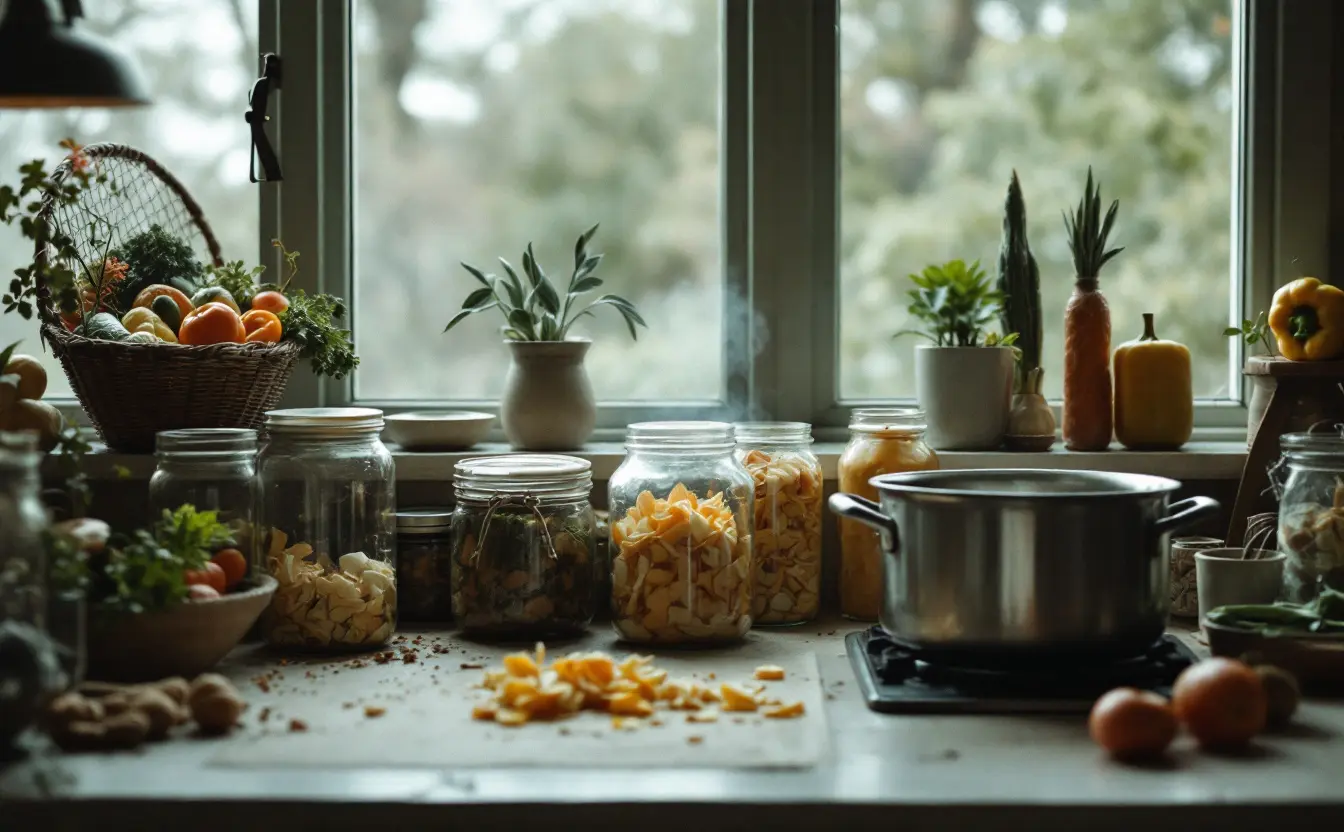
The first Thanksgiving I hosted in our half-renovated farmhouse, I cooked for twenty and fed eleven. We ate turkey for a week, threw out a casserole nobody touched, and filled two trash bags with paper plates, foil pans and plastic wrap. It was a lovely day. It was also, by any honest measure, a lot of waste.
Thanksgiving concentrates the problem of food waste into one afternoon. According to the U.S. EPA, food is the largest single category of material sent to municipal landfills, where it breaks down without oxygen and gives off methane. You don't need to turn the holiday into a sustainability seminar to waste less of it. Most of the gains come from planning a little more carefully and setting up a few containers before the cooking starts. Here's the order I do it in now.
Step 1: Count the table honestly
Start with real numbers. Confirm who is coming, which guests are small children, who is vegetarian, and who always eats two plates and who eats one. Ask the people bringing dishes what they're bringing, so you don't end up with three sweet-potato casseroles and no green vegetable.
This is the step that saves the most food, and it costs nothing. Almost every overstuffed fridge on the Friday after Thanksgiving started with a vague guess.
Step 2: Plan portions, not abundance
A common rule of thumb is about a pound of whole turkey per person, a bit more if you want leftovers on purpose. A bone-in breast or a smaller bird plus a vegetarian main can make more sense for a mixed table than the biggest bird in the case.
Then look hard at the side dishes. Holiday menus grow by addition: every family adds a dish, and nobody takes one away. Fewer dishes, made well, mean less left over. If tradition says the marshmallow yams must appear, make a smaller pan.
Step 3: Shop the pantry first
Before you write the list, go through the cupboards and the freezer. Half a bag of cranberries from last winter, the spare can of pumpkin, the stuffing bread you froze in the fall all count. Write the list by store section, buy loose produce where you can so you take only what you need, and resist the bulk bargain on something you'll use a quarter of.
I'm not going to pretend that buying ingredients in less packaging changes the world. It helps a little. Not throwing out food you paid for helps more, because all the water, fuel and land that went into growing it is wasted with it.
Step 4: Thaw the bird on schedule
A frozen turkey that hasn't thawed in time is one of the classic ways a holiday meal gets compromised. The USDA's guidance is to thaw in the refrigerator, allowing roughly 24 hours for every four to five pounds, so a big bird needs several days. Cold-water thawing is faster, about 30 minutes per pound, with the bird in a leak-proof bag and the water changed every half hour. Count backward from the day and put a reminder on your phone. For anything else on food safety, the USDA Food Safety and Inspection Service is the source to check.
Step 5: Decide on dishes, and be honest about the trade-off
Real plates, glasses and cloth napkins create almost no trash, though they do mean dishwashing water and energy. Over many uses they come out well ahead of single-use plates, and a full dishwasher is generally more efficient than washing everything by hand under a running tap.
If you don't own enough, borrow from a neighbor, ask guests to bring a place setting, or pick up a stack of mismatched plates at a thrift store and keep them for every crowd you host. If you do use disposables, uncoated paper plates and napkins are accepted by some municipal food-scrap programs. Be skeptical of "compostable" plastic cups and cutlery; most need an industrial composting facility, and many communities don't have one that takes them.
Step 6: Set up a scrap station before you start cooking
This is the habit that changed my kitchen. Before the first onion is chopped, put out three containers.
- A stock bowl for clean vegetable trimmings: onion ends and skins, carrot peels, celery leaves, herb stems, mushroom stems. Skip cabbage, broccoli and other brassicas, which can turn stock bitter.
- A compost bin for coffee grounds, tea leaves, fruit peels, eggshells and vegetable scraps that won't go in the stock.
- A fat jar, an empty can or jar for grease and drippings you won't use for gravy.
Once they're out, nobody has to make decisions mid-chaos. Scraps just go where they go.
Step 7: Serve so people take what they'll eat
Put food out in smaller dishes and refill them from the kitchen, rather than heaping everything onto platters that sit in the open for hours. Let people serve themselves, and give kids smaller plates. A table that looks generous doesn't have to mean food going cold on it.
Step 8: Pack leftovers within two hours
Food-safety guidance is to refrigerate perishable food within two hours of cooking. In practice, that means someone needs to start packing up while the pie is being cut. Carve the remaining meat off the bones, since a whole carcass cools slowly, and pack food in shallow containers so it chills quickly.
Plan to use refrigerated leftovers within three or four days, or freeze them. Label anything that goes into the freezer with the date and what it is; a frozen tub of mystery gravy in March helps no one.
Ask guests ahead of time to bring a container or two, or keep a stack of clean jars and takeout tubs for sending food home. A guest who leaves with a portion of stuffing and a slice of pie is a guest who isn't leaving it in your fridge to spoil.
Step 9: Make stock from the carcass
The turkey frame and that bowl of vegetable trimmings are the makings of the best soup of the year. Put the bones and scraps in a big pot, cover with water, add a bay leaf and a few peppercorns, and simmer gently for a few hours. Strain, chill, and lift off the fat. Stock keeps for a few days in the fridge and for months in the freezer, and it turns the next week's leftovers into soup, risotto or pot pie.
Step 10: Keep fats out of the drain
Grease poured down a sink cools and hardens in pipes and sewers, where it combines with other debris into the clogs that utilities spend a great deal of money clearing. Let fats cool in the jar, then put the sealed jar in the trash. If you fry a turkey, a few gallons of used oil is a different matter; many communities have drop-off sites that collect cooking oil, often around the holidays, so check with your local waste program.
Step 11: Compost what you can, and know what you can't
Vegetable peels, coffee grounds, stale bread, squash rinds and the stock vegetables after straining all compost well. Meat, bones, dairy and greasy food generally don't belong in a backyard pile, where they smell and attract animals; some municipal food-scrap programs accept them, so check yours. Our guide to backyard composting without the smell covers getting the balance right when a holiday dumps a lot of scraps on the pile at once.
Step 12: Recycle what actually recycles
Rinsed cans, clean cardboard and glass jars generally go in the bin. Aluminum foil and foil pans are accepted in some programs if they're clean, but a sheet crusted with turkey fat isn't. Plastic wrap and bags almost never belong in curbside recycling. If you've ever wondered why those rules exist, our piece on where your recycling actually goes follows a bin through the sorting plant.
A short plan for the days after
Leftovers get eaten when someone has a plan for them. Ours goes roughly like this: sandwiches on Friday, turkey and vegetable soup from the new stock on Saturday, a pot pie or hash with the last of the meat and potatoes on Sunday. Cranberry sauce freezes well, as do most pies and rolls. By Monday the fridge is back to normal and the freezer holds a few labeled containers of stock.
None of this asks you to give up the parts of the day that matter. It asks for a few jars on the counter and a list written with real numbers. For more small habits like these, our green tips page is a good place to start. And the best part, honestly, is the Saturday soup, which tastes better than anything on Thursday's table and comes from the stuff that used to go in the trash.