Water & Rivers · Science & Explainers
Algae blooms in rivers: green mats, toxic scums and golden algae
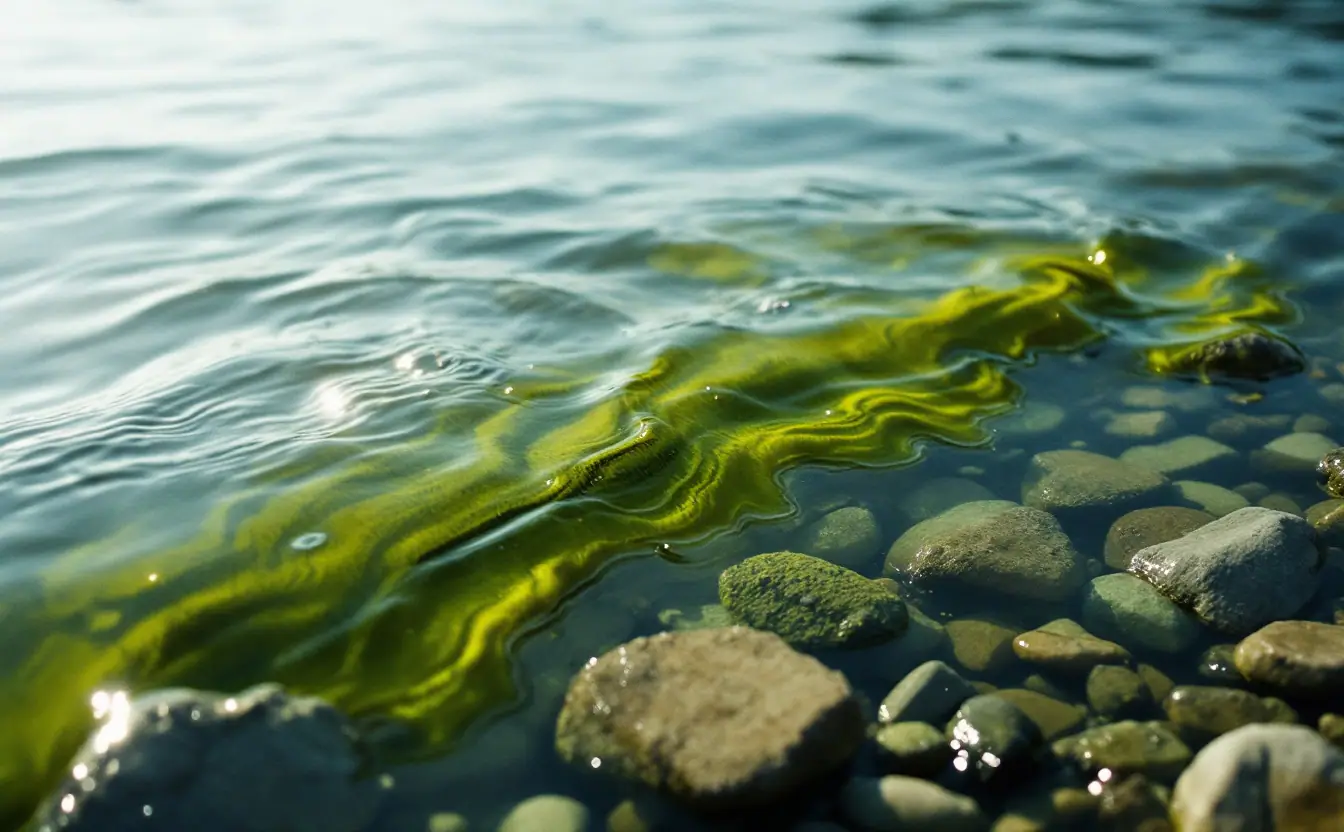
By the middle of August, the riffle below my favorite bridge looks like it needs a haircut. Bright green streamers trail off every cobble and wave in the current, and the slack water along the edges carries yellowish rafts studded with bubbles. Pick up a rock and it comes out slick, wrapped in strands that feel like wet hair. Kids poke at the mats with sticks. Dogs wade straight through them. Somebody on the bank always asks whether it's dangerous.
Usually the honest answer is "probably not, but it's telling you something about the river." Sometimes the answer is "get your dog out of the water now." Here's how I tell the two apart after years of sampling streams for a university lab, and what I'd want anyone who swims, fishes or walks a dog along a river to know.
Why summer rivers turn green
Algae are always in a river. They coat stones in the thin brown film that makes them treacherous to wade, and mayfly and caddisfly larvae graze that film like cattle on a pasture. A bloom is growth that races ahead of the grazers and the current. Four conditions usually line up first.
Nutrients. Phosphorus and nitrogen fertilize algae the same way they fertilize corn. They wash in from cropland and lawns, seep from aging septic fields, run off pastures and leave wastewater plants, which remove much but not all of what comes in. In many freshwater systems phosphorus is the nutrient in shortest supply, so a small increase can mean a lot more green.
Low flow. By late summer many rivers have shrunk to base flow, fed mostly by groundwater, with less water to dilute whatever enters and a slower current. Our guide to reading a stream gauge shows how far the numbers can drop by August.
Light and warmth. Clear, shallow water lets sunlight reach the bed, and warm water speeds growth. On some creeks you can see the exact line where the shading woods end, the pasture begins and the streamers start.
No floods. A big storm works like a scrub brush, tumbling cobbles and tearing mats loose. After weeks without high water, growth piles up, which is why one hard thunderstorm can make the ugliest mats disappear overnight.
The ordinary green stuff
Most of what you see in a summer riffle is filamentous green algae: chains of cells that grow into threads, streamers and mats. Two kinds account for much of it.
Cladophora forms coarse, branching tufts anchored to rocks, trailing long streamers in fast water and feeling a little like wet cotton string. It washes up in rotting windrows on Great Lakes beaches and carpets enriched riffles from Midwestern farm country to stretches of Montana's Clark Fork.
Spirogyra and its relatives are unbranched, very slimy and a brighter grass green, floating in soft masses in pools and buoyed by trapped oxygen bubbles. Lift a handful and it slides through your fingers.
These algae aren't toxic, but they still change the river. By day a thick mat pumps oxygen into the water; at night it keeps respiring and pulls oxygen back out. In a sluggish reach the water can be supersaturated in the afternoon and close to a crash before dawn, which is when fish die. When the mats die back, their decay uses up still more oxygen. If you've read our walk-through of a stream water quality report, this is the story behind a dissolved oxygen reading well above 100% saturation.
Heavy mats also smother the gaps between stones where insect larvae live and fish lay eggs. Turn over a cobble from a matted riffle and you'll usually find fewer sensitive mayflies and stoneflies, and more midges, snails and worms.
Cyanobacteria: the ones to take seriously
Cyanobacteria are often called blue-green algae, but they're photosynthesizing bacteria. Many are harmless. Some produce toxins, including microcystins, which damage the liver, and anatoxins, which attack the nervous system and act fast. The same species can be toxic in one bloom and not the next, and you can't tell by looking.
In lakes, cyanobacteria mostly drift in the water and form the familiar pea-soup or spilled-paint scums. Rivers get those too, in slow pools and in stretches behind dams that behave like lakes.
Rivers also have a sneakier form: mats on the bottom. Picture dark brown, olive or nearly black growth on rocks, leathery or velvety. On warm afternoons gas bubbles lift chunks free, and they pile up along gravel bars, exactly where a dog goes sniffing. Many smell musty or earthy, and dogs that licked or ate them have died within hours, in rivers in California, the Pacific Northwest, New Zealand and elsewhere.
Agency fact sheets describe a rough field test: poke a stick into a surface scum. If it comes out draped in strings, it's probably filamentous algae; if it looks dipped in paint, think cyanobacteria. Treat that as a hint. Only lab analysis says whether toxins are present, and a bloom that tests clean this week can turn toxic the next.
Boiling doesn't help, by the way; cyanotoxins hold up to heat, and a backpacking filter won't reliably remove them. If a backcountry source looks scummy or matted, keep walking.
Golden algae and salty water
A third kind of trouble mostly kills fish. Prymnesium parvum, known as golden algae, is a single-celled alga that does best in brackish water, which carries more salt and dissolved minerals than a typical freshwater stream. It has caused repeated fish kills in Texas and the southern Plains, where naturally salty rivers such as the Pecos give it a foothold. In a bloom the water can turn golden or tea-colored, and it sometimes foams in riffles.
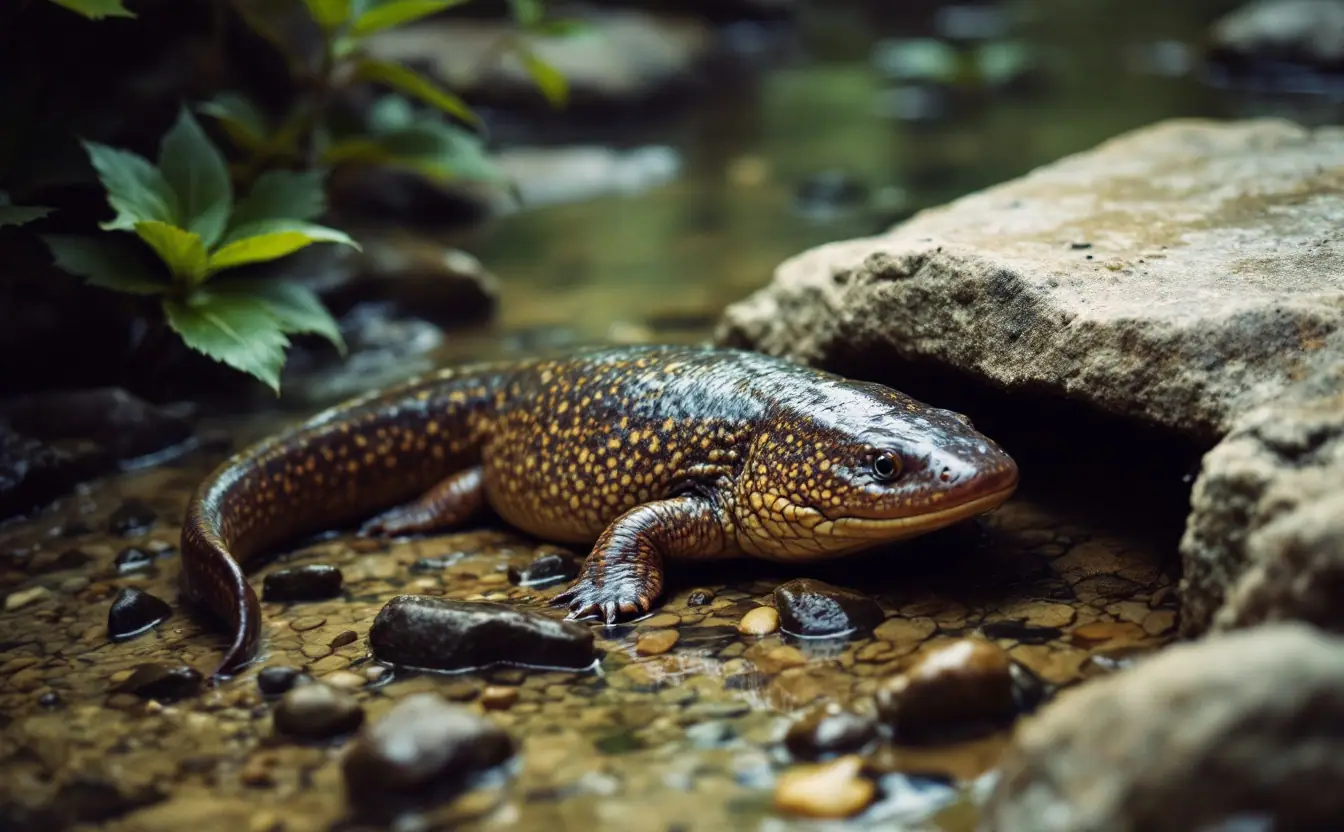
Golden algae toxins damage gills, so the victims are animals that breathe through them: fish, freshwater mussels and gill-breathing salamanders. They aren't known to harm people, or the mammals and birds that drink the water. The water looks a bit off, the dog is fine, and then the shoreline fills with dead fish.
The best-known case in Appalachia came in September 2009 on Dunkard Creek, which loops back and forth across the Pennsylvania–West Virginia line. A golden algae bloom killed fish, freshwater mussels and mudpuppies along many miles of the creek. Investigators connected the bloom to water carrying unusually high levels of dissolved solids, much of it traced to discharges from coal mining, which had made a freshwater creek salty enough for the alga to take hold. Mine water can do more than turn a creek orange, as we describe in our piece on acid mine drainage; sometimes the damage is in chemistry you can't see at all.
The practical warning sign is conductivity: a stream that normally reads low and suddenly runs high, especially in a drought, is one where golden algae could get a start. If you follow a creek's numbers, that jump is worth asking about.
Bloom types side by side
| Type | What it looks like | Where it shows up | Risk to people and pets | Sensible response |
|---|---|---|---|---|
| Filamentous green algae | Green threads, streamers, bubbly floating mats | Sunny riffles and pools at late-summer low flow | Not toxic; slippery footing | Wade carefully; read it as a nutrient warning |
| Floating cyanobacteria (Microcystis and others) | Pea soup, spilled paint, blue-green scum | Slow pools, water behind dams, warm backwaters | Liver and nerve toxins possible; serious danger to dogs | Stay out, keep pets out, report it |
| Bottom-growing cyanobacteria mats | Dark brown or black leathery mats; clumps on gravel bars | Clear, warm rivers with steady summer flows | Fast-acting nerve toxins possible; deadly to dogs | Leash dogs near the edges |
| Golden algae | Tea-colored water, foam, fish gasping at the surface | Salty or high-dissolved-solids water | Not known to harm people; deadly to fish and mussels | Report the kill the same day |
| Diatom mats such as didymo | Tan mats that feel like wet wool, not slime | Cold, clear, often low-nutrient streams | Not toxic; smothers the bottom | Clean, drain and dry your gear |
Two lookalikes cause false alarms: duckweed, a tiny floating plant with hairlike roots, and spring pine pollen, a yellow film that blows into corners. Neither is a reason to skip a swim.
What the signs mean for you
Swimmers. If the water looks like paint or pea soup, has a scum on top, or smells musty or rotten, stay out. "When in doubt, stay out" is the line many health departments use, and it holds up. Don't swallow river water, and rinse off afterward. If you get a rash or an upset stomach after a swim, tell your doctor where you were.
Dogs. Dogs face the highest risk, because they drink the water, eat the clumps and lick their coats afterward. Bring fresh water from home and keep them leashed near scums and stranded mats. If a dog goes in anyway, rinse it with clean water before it can groom. Vomiting, drooling, stumbling, tremors or labored breathing after a swim are an emergency: go straight to a veterinarian and mention a possible bloom.
Anglers. Guidance varies by state. Many health agencies advise against eating fish from an active toxic bloom, and at minimum suggest discarding the guts and rinsing fillets in clean water, since toxins tend to concentrate in organs. Never keep fish you find dead or dying. In a golden algae event, watch for fish gulping at the surface or hanging listless in the shallows, and for mussels lying open.
Who to tell, and what to tell them
If you see a suspected harmful bloom, contact your local health department or your state's environmental agency. Many states post advisory maps during the season, and the U.S. EPA's cyanobacteria pages collect general guidance and state resources. Report a fish kill to your state environmental or fish and wildlife agency quickly. Dead fish are scavenged fast and chemistry changes by the hour, so a same-morning report is worth far more than one from next week.
Whoever you contact will want the same few details:
- A precise location, ideally a dropped pin from your phone.
- The date and time.
- Photos: one wide shot and one close-up with something for scale.
- Color, texture and smell, and whether the growth floats or sits on the bottom.
- Any dead fish, sick animals or people who felt ill.
Don't collect samples with bare hands. A watershed group that visits the same sites every month is the best early-warning system a river can have; our guide to volunteer stream monitoring explains how to join one.
The next time you stop on a bridge in August and look down, read the river in order. Bright green streamers are a note about fertilizer and low water. Dark mats stranded on a gravel bar are where the dog stays on the leash. And a creek gone the color of tea with fish at the surface deserves a call that same day, while the evidence is still floating.
Hollow & Headwater is an independent publication. Nothing here is official guidance – for permits, rules or emergencies, go to the relevant public authority.